

 feedom@haomei-machinery.com
32 Meter Concrete Pump
Posted On: 24/03/2026 | Posted by: Haomei Concrete Pumps
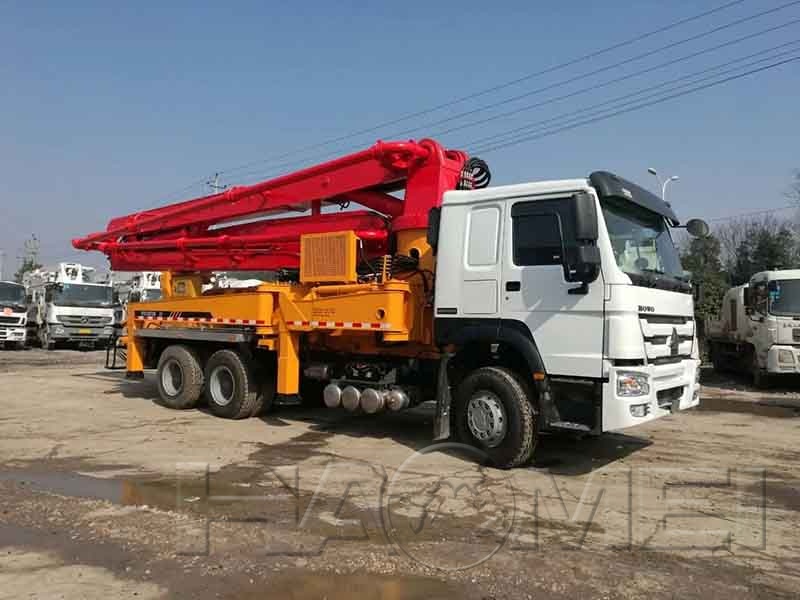
A 32 meter concrete pump sits in a practical middle range for urban buildings, low- to mid-rise projects, factory slabs, bridge approaches, and residential developments where access is tighter than on large infrastructure sites. For many fleets, it is the size that balances reach, transport flexibility, axle loading, and operating cost.
If you are evaluating this class, the main questions are usually straightforward.
Is 32 m enough vertical and horizontal reach for the jobs you quote most often?
Can the truck chassis comply with local road and axle regulations?
Will outrigger footprint fit your sites?
Is the output matched to your batching and placing crew?
Does the investment beat hiring in a pump truck?
What a 32 m class pump is used for
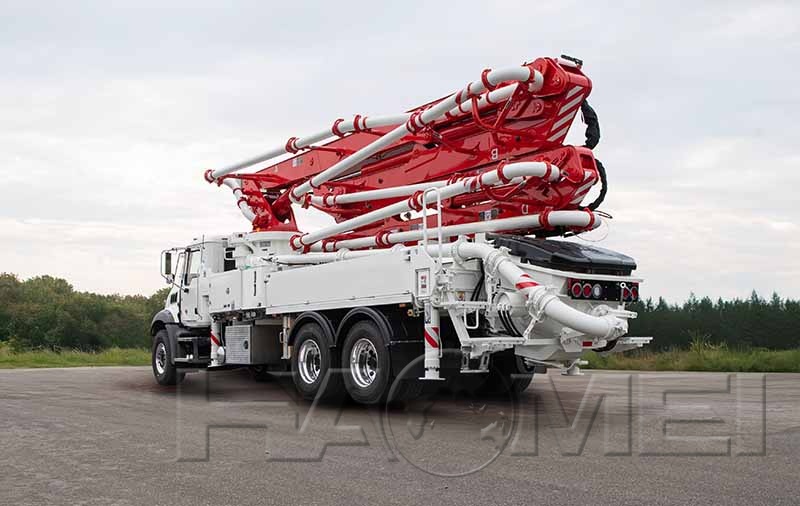
In manufacturer catalogs, a 32 m unit is typically a truck-mounted boom pump with a 4-section or 5-section boom, depending on design. Actual vertical reach, horizontal reach, end hose length, and unfolding height vary by model, so always verify the data sheet of the exact machine.
Typical applications include:
8 to 10 story concrete placement, depending on slab height and setup conditions
Commercial slabs and podium decks
Narrow urban jobs where a larger 42 m or 47 m machine is harder to position
Municipal works, culverts, retaining walls, and small bridge structures
Precast yards and industrial foundations
For contractors working mainly on compact sites, a 32 m class can be easier to dispatch than a larger Boom Pump while still covering most daily placements.
Core selection checklist
Use this checklist before requesting quotations.
| Item | What to verify | Why it matters |
|---|---|---|
| Vertical reach | Manufacturer boom reach drawing | Confirms slab and wall coverage |
| Horizontal reach | Working range, not just nominal boom length | Prevents underestimating edge placement |
| Pump output | m3/h at low and high pressure | Must match batching supply and pipe size |
| Maximum pressure | Concrete pressure rating | Important for stiff mix and longer line work |
| Chassis axle layout | 3-axle or 4-axle, GVW, local road rules | Directly affects legal transport |
| Outrigger spread | Front and rear setup width | Critical on tight sites |
| Unfolding height | First boom opening clearance | Necessary under power lines and roofs |
| Pipeline size | Usually 125 mm or similar, verify exact spec | Affects wear parts and output |
| Engine and PTO | Fuel use, emissions, local service support | Impacts operating cost and uptime |
| Parts support | Delivery time for wear plates, S-valves, seals | Reduces downtime risk |
Compare a 32 m unit with nearby boom sizes
The best comparison is not only reach. It is reach plus access, chassis weight, and utilization.
| Boom class | Best fit | Main advantage | Main limitation |
|---|---|---|---|
| 20 m to 28 m | Houses, small sites, indoor or access-limited jobs | Lower cost, compact setup | Limited reach for mid-rise work |
| 30 m to 32 m | General commercial and urban placements | Strong balance of reach and mobility | May be short for larger podiums or tall pours |
| 36 m to 39 m | Broader site coverage | More flexibility on medium jobs | Larger footprint and usually higher cost |
| 42 m to 47 m | Mid- to high-rise and larger commercial works | Covers more area from fewer setups | Heavier, more expensive, harder on tight access |
| 48 m and above | High-rise and major civil projects | Long reach and fewer repositionings | High capital cost and greater transport constraints |
If your site history shows frequent repositioning with 28 m pumps, stepping to a 32 m or even a 42m Concrete Pump Truck may reduce labor hours and pour interruptions. If most jobs are villas, small warehouses, and narrow roads, the 32 m class often remains the safer fleet choice.
Price range and investment checks
Pricing changes by brand, chassis, emissions level, hydraulic components, and whether the machine is new or used. Because prices vary by country, import duty, exchange rate, and configuration, treat any online quote as provisional until you receive a formal specification sheet.
A practical buying process is:
Ask for the full technical datasheet, not only brochure highlights.
Confirm chassis brand, engine power, axle layout, and emission stage.
Verify boom section design, outrigger span, and remote-control scope.
Request wear parts list and annual maintenance estimate.
Compare landed cost, including freight, tax, commissioning, and operator training.
Check warranty terms for hydraulic system, pump unit, and structural boom.
When checking return on investment, calculate these five items together:
Acquisition cost
Fuel consumption per pumping hour
Wear parts cost per 1,000 m3 pumped
Operator and helper labor
Revenue loss from downtime
A lower purchase price is not automatically lower ownership cost. On pump trucks, poor parts availability can erase the initial saving very quickly. Wear components such as delivery cylinders, spectacle plates, cutting rings, filters, seals, and pipe clamps should be available locally or with reliable lead times. That is why many fleet managers ask suppliers early about Concrete Pum Truck Parts in Stock before committing to a brand.
Operating steps that reduce pour problems
Most pumping issues come from setup, mix inconsistency, or poor line management rather than boom length.
Use this field sequence:
Inspect ground bearing capacity and outrigger pads.
Check overhead obstructions and keep safe clearance from power lines.
Level the machine within manufacturer tolerance.
Prime the system according to the pump maker's procedure.
Confirm slump, aggregate size, and admixture compatibility with pumpability.
Start at controlled output and watch pressure spikes.
Keep communication constant between operator and hoseman.
Wash out fully after placement to limit hardened concrete and wear.
For pumpable concrete, buyers should align job requirements with local mix design capability. In many markets, standard structural concrete can be pumped successfully, but poor grading, oversized aggregate, low paste volume, or unstable slump can still block lines.
Safety and compliance points that should not be skipped
Concrete pump trucks are regulated through a mix of road transport rules, lifting and work equipment standards, and local occupational safety law. Requirements differ by country, so verify the exact jurisdiction. Still, these checks are broadly applicable and should be treated as mandatory planning items.
| Safety item | What to confirm |
|---|---|
| Operator training | Trained, authorized operator for pump truck and remote control |
| Stability | Outriggers fully deployed as required by the load chart and manufacturer instructions |
| Exclusion zone | Barrier around pipeline, hopper, outriggers, and end hose work area |
| Power line clearance | Minimum approach distance required by local electrical safety rules |
| Inspection records | Daily checks plus documented periodic inspection of boom, pipeline, and safety devices |
| Hose handling | End hose length and restraint per manufacturer limits |
| Road compliance | Truck dimensions, total weight, and axle loads within legal limits |
In the United States, pump truck use may intersect with OSHA construction safety rules and Department of Transportation road requirements. In Europe, road legality, CE conformity, and national work-equipment inspection regimes are central. Since legal duties differ, request compliance documents from the seller and have them reviewed locally before purchase.
Industry trends affecting this equipment class
Three market shifts are shaping current purchasing decisions.
First, digital diagnostics are becoming standard. Fleet owners increasingly expect remote fault reading, engine and hydraulic monitoring, service reminders, and pump-hour tracking.
Second, chassis and emissions compliance matter more in city work. Low-emission zones and stricter vehicle rules can affect where an older pump truck may operate.
Third, used-equipment scrutiny is rising. Serious buyers now request boom inspection history, hour-meter records, concrete output history if available, and evidence of previous structural repair.
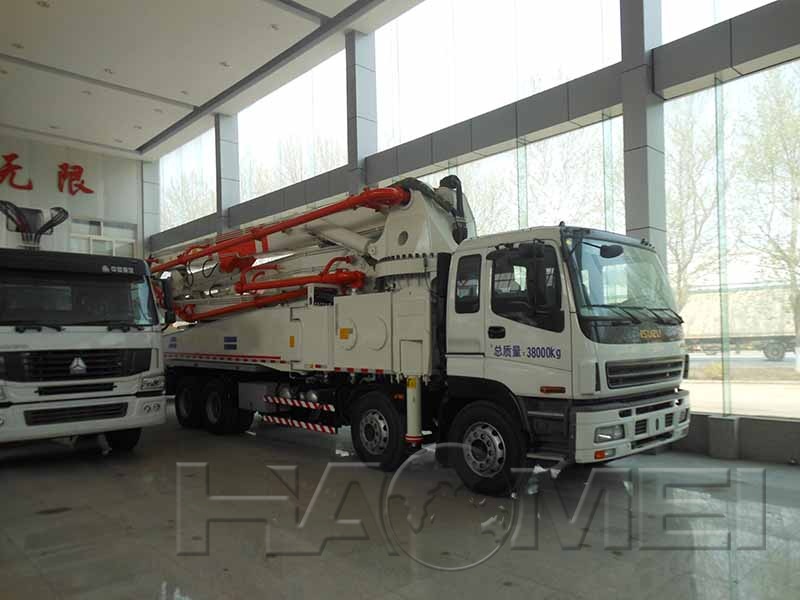
For a 32 m class machine, the most successful purchases usually come from matching three numbers before anything else: actual reach envelope, legal transport weight, and annual pumping volume.
Original source: https://www.concrete-pump-cn.com/a/32-meter-concrete-pump.html
Tags: 32 meter concrete pump, boom pump,
Previous: Which Is More Popular in Rental Market: Concrete Pump Trailer or Concrete Pump Truck
Next: Concrete Pump Truck Reach