

 feedom@haomei-machinery.com
Small Concrete Pump Truck
Posted On: 10/03/2026 | Posted by: Haomei Concrete Pumps
5 hot questions people ask about a small concrete pump truck (and practical answers)
Interest in the small concrete pump truck has spiked on Google and Q&A communities lately because more crews are tackling tight-access residential work, small commercial slabs, and infill sites where a full-size boom feels oversized. Below are 5 questions that have been trending across searches and Q&A threads in the past few months, answered from an equipment-first perspective (not copied from platform replies).
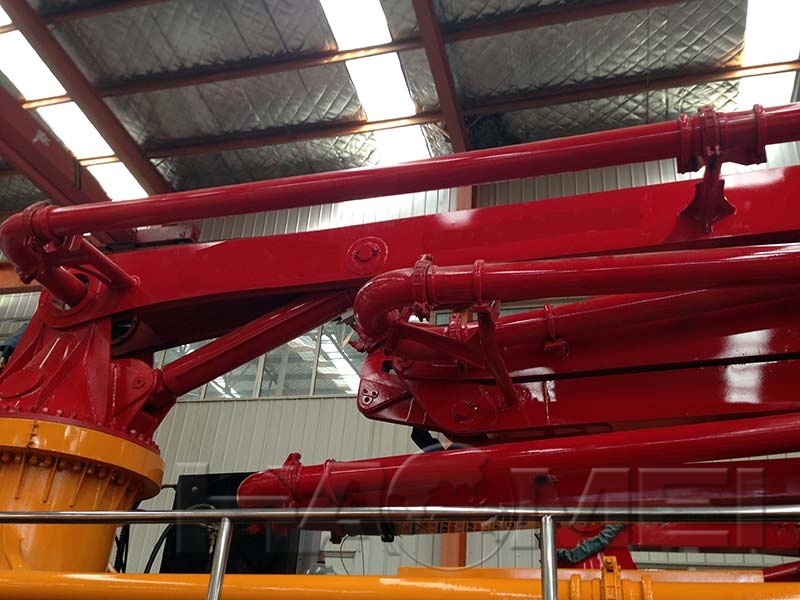
1) "What counts as a small concrete pump truck, and what boom length should I choose?"
In practice, "small" usually means a boom that is easier to position in residential streets, has a lighter footprint, and fits jobs where setup space is limited. Many contractors looking at their first unit end up comparing 20 m to 32 m class machines because that band covers common foundations, driveways, low-rise slabs, and small structural pours.
A good way to select boom length is to start from your most frequent pour, then add a buffer for reach and setup constraints.
| Typical jobsite need | What to check first | Why it matters | Common small-truck fit |
|---|---|---|---|
| Driveway, patio, small slab | Horizontal reach and front outrigger span | Tight streets restrict stance | 20 m to 28 m class |
| 2-story residential, small commercial | Vertical reach and fold type | Avoids hitting eaves and power lines | 25 m to 32 m class |
| Infill lots, limited setup | Minimum setup width and one-side support options | May need partial outrigger deployment | Shorter boom, compact chassis |
| Frequent short hops between sites | Turning radius and transport height | Saves time and avoids route issues | Compact wheelbase |
If you already know you will occasionally need longer reach (for example, over a house to a backyard footing), it can be smarter to buy the "next size up" rather than forcing creative setup every time. But if your sites are consistently tight, a slightly shorter boom that sets up faster often wins on real productivity.
To compare configurations beyond "small," it helps to read a broader Boom Pump overview and map boom geometry to your job types.
2) "How much does a small concrete pump truck cost to run per day, not just purchase price?"
Most first-time shoppers focus on sticker price, but the bigger surprises tend to be wear parts, cleaning time, and crew routine. Operating cost depends on your concrete mix designs, pumping hours, hose length, and cleaning discipline.
Think in three buckets:
Consumables and wear: delivery line, elbows, clamp gaskets, cutting ring/wear plate (for certain valve types), hopper grate wear, and rubber components. Abrasive mixes and long pumping distances accelerate wear.
Fuel and fluids: engine load changes with pressure, long lines, and high slump variability. If your work is stop-start (small pours), idling and repeated priming can add up.
Labor and downtime: daily washout and end-of-day cleanup are non-negotiable. The "cheap day rate" disappears if you lose an hour to hardened buildup or a clogged line.
A practical way to budget is to track: pumping hours, cubic yards pumped, and cleaning time for two weeks, then back-calculate cost per yard. That number is more useful for quoting work than a flat per-day estimate.
If you want to reduce downtime risk, check availability of common consumables like Concrete Pum Truck Parts in Stock before committing to a model.
3) "Can a small concrete pump truck handle low-slump or fiber mixes without constant blockages?"
Yes, but success depends more on mix consistency and pipeline management than on whether the truck is "small." Blockages typically come from one of these patterns:
Wrong slump range for the line length: If you are pushing a stiff mix through a long hose run with multiple bends, pressure spikes and segregation can occur.
Poor priming or inconsistent lubrication: Skipping proper priming makes the first few yards risky.
Stop-start pumping: Frequent pauses let concrete settle in the line, especially with fiber.
Bad bend management: Tight elbows and kinked hose sections are blockage multipliers.
What to do in the real world:
Specify a pump-friendly mix for your typical distances, and be consistent between loads.
Use the correct priming method your manufacturer recommends and do not "wing it" when switching mixes.
Keep hose runs as straight as possible, minimize sharp elbows, and avoid dragging hoses into S-shapes.
Train the crew to maintain steady pumping rhythm; small trucks often work smaller pours where start-stop is common.
Fiber mixes can pump well when the line is properly lubricated and the crew keeps flow steady. The goal is not maximum pressure, it is stable flow.
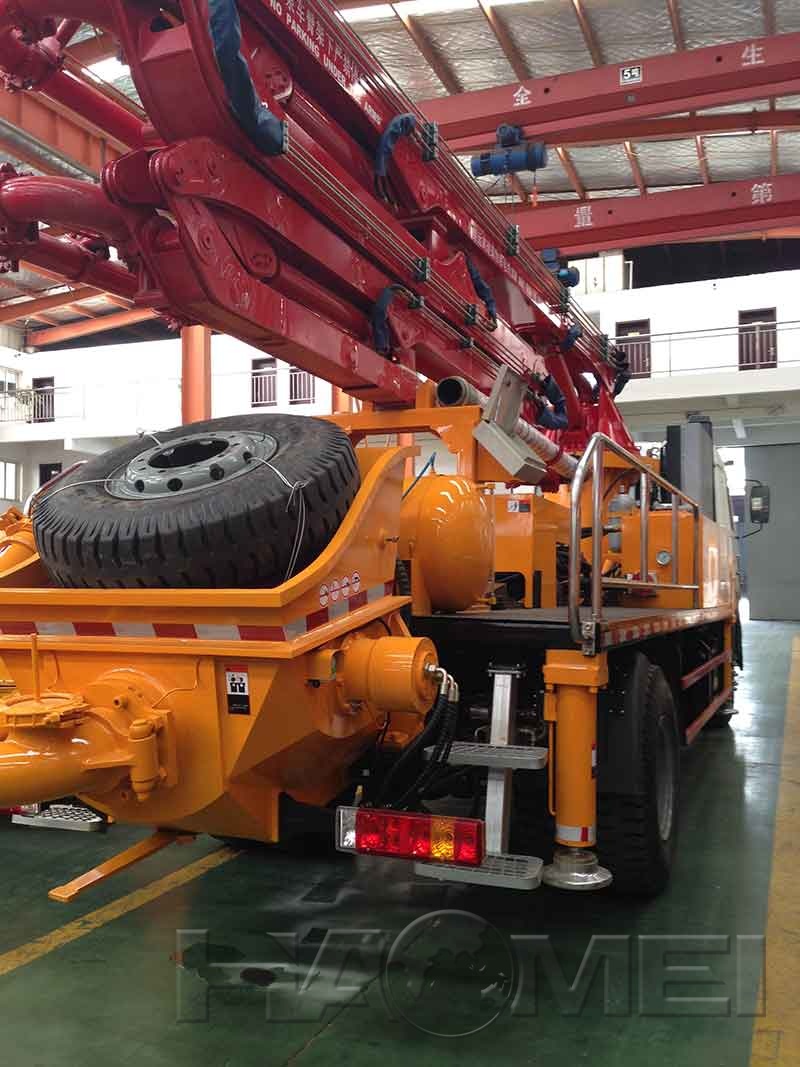
4) "How much space do I need to set up outriggers for a small concrete pump truck on residential streets?"
Setup space is one of the biggest decision points for small trucks. "Small" does not automatically mean "fits anywhere," because outrigger spread can still be wide relative to a narrow street.
Before you buy, confirm four measurements and policies:
Outrigger footprint (fully deployed): Ask for the exact maximum width and front-to-rear span.
Partial outrigger capability: Some models allow one-side or reduced-span setups with limitations on boom working area.
Ground bearing pressure: Soft lawns, backfilled trenches, and pavers may need larger pads and careful placement.
Overhead clearance and swing: Trees, service drops, and rooflines can constrain boom unfolding even if outriggers fit.
On residential work, a smaller truck often pays off because it can reduce the need for street closure and complicated traffic control. But do not assume. Request an outrigger layout diagram and test it against your most common street widths and driveway slopes.
5) "What maintenance items should I check during a test run so I do not inherit problems?"
A short inspection can reveal whether a pump has been maintained properly or simply washed and parked.
Here is a high-signal checklist you can use during a demo or inspection.
| Area | What to look for | What it can indicate |
|---|---|---|
| Hopper and grate | Excessive pitting, bent grate, abnormal vibration | Poor washout habits, hard aggregate wear |
| Pumping system | Unusual knocking, uneven stroke, slow pressure build | Wear components near end-of-life |
| Hydraulic system | Foaming oil, leaks at fittings, overheating during steady pumping | Air ingress, neglected filter changes |
| Boom sections | Hairline cracks near pins, sloppy bushing play, uneven movement | Fatigue, overdue greasing, expensive repairs |
| Delivery line and clamps | Deformed clamps, worn gaskets, rusted elbows | Higher risk of leaks and blowouts |
| Remote and sensors | Intermittent controls, alarms bypassed | Electrical issues, unsafe modifications |
Ask the seller to perform a steady pump test (not only short bursts). Many problems hide until the system is warm and under continuous load.
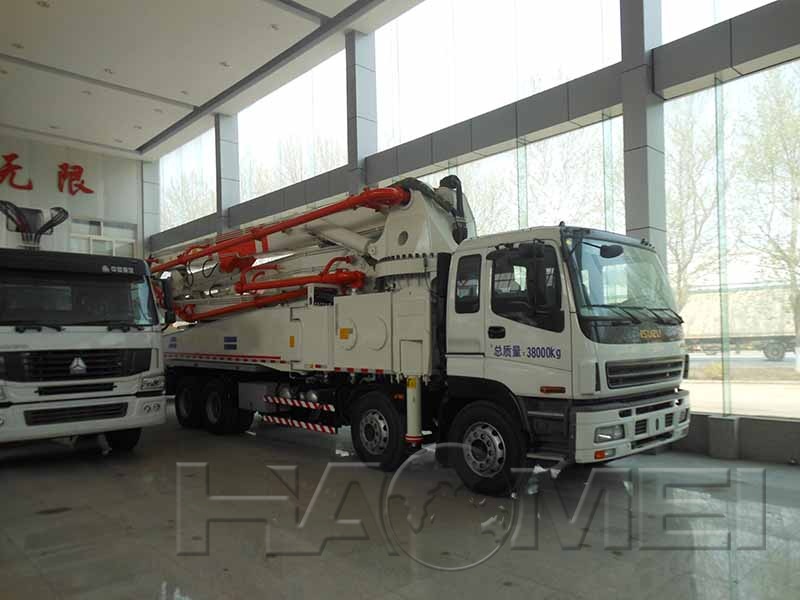
Quick comparison: when a small concrete pump truck is the right move
A small concrete pump truck tends to be the best match when your projects value fast setup, tight access, and frequent mobilization more than maximum reach. If your weekly schedule includes multiple small pours across different neighborhoods, the time saved on positioning, permitting, and cleanup logistics can matter as much as pure pumping capacity.
If you want, share your typical job types (slab size, stories, and how often you pump over structures), and I can suggest a boom-length range and setup features to prioritize.
Original source: https://www.concrete-pump-cn.com/a/small-concrete-pump-truck.html
Tags: small concrete pump truck, mini boom pump truck, short boom concrete pump, concrete pump truck cost, concrete pumping setup,
Previous: Concrete Mixing Pump
Next: 36m Concrete Pump For Sale