

 feedom@haomei-machinery.com
Small Concrete Pump for Sale
Posted On: 15/04/2026 | Posted by: Haomei Concrete Pumps
Construction teams usually start with one practical question: will a compact pump place concrete faster than labor, without adding transport and maintenance headaches. That decision depends on output, aggregate size, line length, access limits, and total owning cost, not just purchase price.
A small concrete pump is typically considered when the jobsite has tight access, lower daily volume, or frequent short pours such as rural housing, foundations, columns, floor toppings, small commercial slabs, and municipal repair work. In these cases, the right machine can reduce placement labor, improve pour consistency, and shorten cycle time.
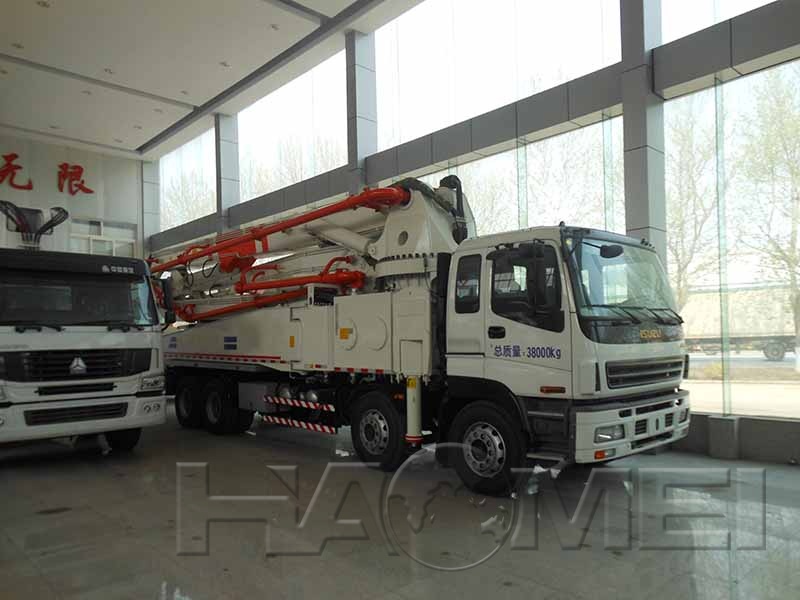
How to choose the right compact pump
Start with the job, not the brochure. Use this checklist before requesting quotations.
1. Define the concrete you will place
Check these mix details with your supplier:
- Maximum aggregate size.
- Slump range.
- Cement content and admixtures.
- Whether the mix is designed for pumping.
The American Concrete Pumping Association notes that pumpable concrete must match the line diameter, pump type, and job conditions. Oversized aggregate or harsh mixes increase blockage risk. ASTM mix and testing standards also matter on quality control. For example, slump is commonly checked using ASTM C143/C143M.
2. Match required output to daily workload
Do not buy capacity you cannot use. Also do not undersize and force crews to wait.
Use this simple approach:
- Daily pour target in m3 or yd3.
- Required placement window in hours.
- Add reserve for startup, line priming, hose movement, and delays.
If you need 40 m3 over 4 hours, the average placement rate is 10 m3 per hour. In practice, a machine rated above that is safer because theoretical output is higher than real on-site output.
3. Measure pumping distance and site access
Check these items on every project type:
- Horizontal pipeline length.
- Vertical rise.
- Number of bends and reducers.
- Truck mixer access.
- Power source availability if considering electric units.
- Trailer maneuvering area and towing conditions.
For congested urban sites, a small trailer pump or a compact boom option may outperform larger equipment simply because setup is faster and traffic disruption is lower. If your work regularly needs elevated placement, a compact Boom Pump may be worth comparing against line pumps.
4. Review wear parts and service support
Wear cost often decides profitability more than fuel use. Ask the supplier for:
- Delivery cylinder size.
- S valve or rock valve design.
- Spectacle plate and cutting ring replacement interval.
- Hydraulic component brands.
- Hopper grate safety features.
- Local parts lead time.
If spare parts are difficult to source, downtime can erase any savings from a lower purchase price.
Compare small pump types before investing
The table below helps narrow the options.
| Pump type | Best use | Strengths | Limits | Typical selection concern |
|---|---|---|---|---|
| Trailer line pump | Foundations, slabs, columns, low-rise work | Lower acquisition cost, flexible pipeline routing | Slower setup than boom units, hose handling labor | Actual line length and aggregate size |
| Truck-mounted small boom | Residential and light commercial jobs with repetitive placements | Fast setup, less manual hose movement | Higher capital cost, road compliance required | Chassis service and outriggers space |
| Mixer pump | Smaller projects with batching on site | Combines mixing and pumping | Output may be limited, mix consistency depends on operation | Water control and material feeding |
| Electric small pump | Indoor or noise-sensitive areas | Lower local emissions, quieter operation | Needs reliable power supply | Site voltage and generator sizing |
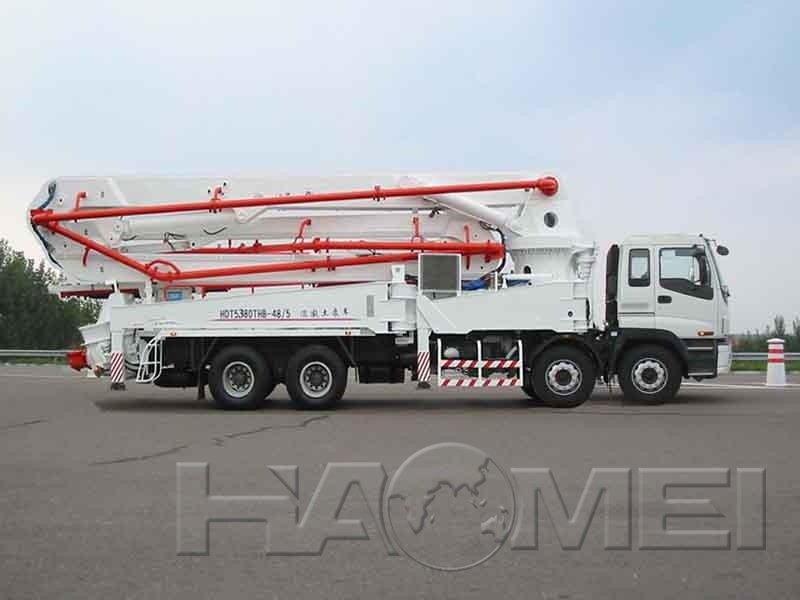
For contractors moving from manual placement to mechanized placement, trailer pumps are often the most economical first step. For firms working in urban residential projects with repeated pours, compact boom machines such as a 20m 25m 28m Mini Concrete Pump for Sale may reduce labor and setup time enough to justify the higher price.
Cost, compliance, and market checks that matter
Price is important, but ownership cost is the decision point. Compare the machine on a 3-year or 5-year cost basis.
What affects purchase price
Main cost drivers include:
- Pump type, trailer or boom.
- Output rating and pressure.
- Engine brand or electric drive.
- Chassis brand for truck-mounted units.
- Remote control, lubrication system, and pipeline package.
- Emission stage and regional certification.
Because pricing varies by configuration, shipping, and local taxes, published list prices are often unreliable unless tied to a specific specification. Ask suppliers to quote the following separately so comparisons stay fair:
| Cost item | Why it matters |
|---|---|
| Base machine | Core capital cost |
| Pipeline and elbows | Often excluded from low headline quotes |
| Spare parts package | Reduces startup downtime |
| Commissioning and training | Affects safe use and early reliability |
| Freight and insurance | Material impact on imported equipment |
| Warranty scope | Not all hydraulic and wear parts are covered equally |
Check regulations before purchase
The machine must match the legal and safety environment where it will operate.
Use this compliance checklist:
- Confirm local road transport limits for truck-mounted units.
- Check engine emission requirements in your market.
- Verify guarding, emergency stops, and hopper grate interlocks.
- Review operator training expectations.
- Confirm lifting and outrigger setup procedures in the manual.
For the United States, OSHA construction safety rules under 29 CFR 1926 are the baseline reference for many site safety practices. For concrete and masonry work, Subpart Q is commonly referenced. For mobile equipment operation, employers should also consider manufacturer instructions and site-specific risk assessments.
Ask for verifiable performance data
When reading brochures, separate theoretical output from jobsite output. Ask the supplier for:
- Maximum theoretical output.
- Maximum concrete pressure.
- Recommended aggregate size.
- Cylinder diameter and stroke.
- Fuel or power consumption range.
- Reference projects similar to your mix and line length.
A reliable quotation should state these values clearly. If a seller cannot provide them, comparison becomes guesswork.
Practical investment screen
Use this short screen before placing an order:
| Question | If yes | If no |
|---|---|---|
| Do you have recurring small to medium pours each month | Buying may make sense | Renting or subcontracting may be better |
| Is labor cost or shortage affecting placement speed | Pump ownership can improve productivity | Manual methods may still be adequate |
| Do you have service staff or dealer support nearby | Lower downtime risk | Add parts stock or reconsider model |
| Can the machine fit your main sites without access issues | Strong match | Consider smaller footprint or alternate type |
For firms comparing compact equipment with larger fleet expansion, it is useful to benchmark the small unit against standard boom classes. That helps clarify whether your workload is truly compact-job focused or already shifting toward larger placements.
Questions to send to suppliers
Send these in writing so quotations are easier to compare:
- What is the rated output and maximum pressure for this exact model.
- What aggregate size and slump range do you recommend.
- Which wear parts are included, and what are the expected replacement intervals.
- What is the standard pipeline package.
- What operator training and commissioning are included.
- What warranty applies to hydraulic components, electrical components, and wear parts.
- What certifications or compliance documents are available for my market.
A well-selected compact pump solves a specific site problem: limited access, moderate volume, and high placement labor. The most economical machine is usually the one that matches your real mix design, line length, support network, and monthly utilization, not the one with the lowest advertised price.
Original source: https://www.concrete-pump-cn.com/a/small-concrete-pump-for-sale-2026-04-15.html
Tags: small concrete pump for sale, mini concrete pump,
Previous: 58m Concrete Pump
Next: Cement Boom Truck