

 feedom@haomei-machinery.com
Trailer Mounted Concrete Pump
Posted On: 09/06/2026 | Posted by: Haomei Concrete Pumps
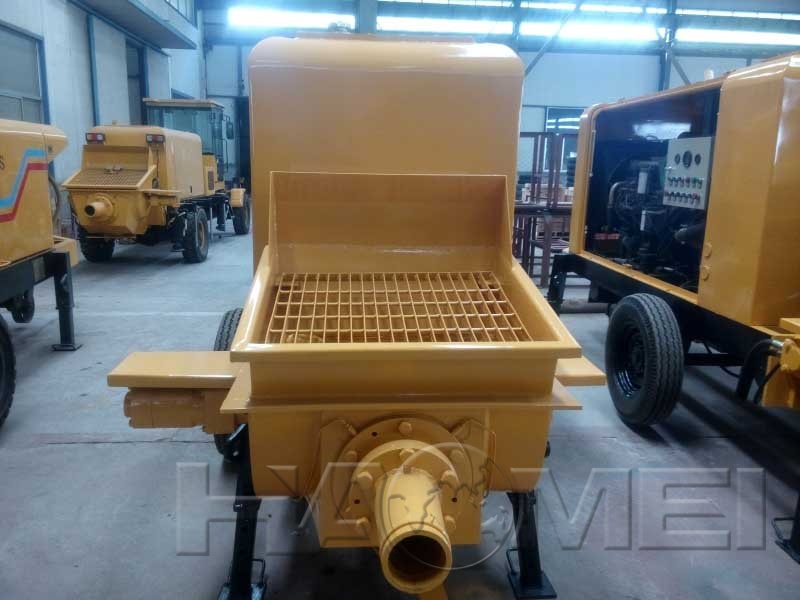
A trailer mounted concrete pump is often the practical answer when a boom pump is too large, site access is tight, or concrete must be placed through hose over distance. It is towed to site, connected to delivery pipe or flexible hose, and fed by a ready-mix truck or batching system.
For equipment purchasers, the challenge is not only choosing output. The right machine must match mix design, pipeline length, vertical lift, labor skill, emission rules, and cash flow. A cheap pump that blocks twice per pour is expensive; an oversized unit can waste fuel, wear parts, and working capital.
Match the Pump to the Job, Not the Brochure
Start with the pour conditions. Pump brochures usually list theoretical output, measured under ideal conditions. Real production is commonly lower because of truck cycle time, hose changes, priming, delays, slump variation, and site coordination.
Use this selection matrix before asking for quotations:
| Job condition | Practical specification to request | Avoid this mistake |
|---|---|---|
| House slabs, footings, small commercial work | 30-50 m3/h output, compact hopper, easy hose handling | Paying for high pressure that is rarely used |
| Mid-rise floors, long horizontal runs | 60-80 m3/h, higher pumping pressure, 125 mm pipeline compatibility | Selecting only by output and ignoring pressure |
| High-rise cores or steep vertical delivery | High-pressure concrete pump, verified pressure curve, wear-resistant pipe | Using a low-pressure unit with excessive line length |
| Remote site without stable grid power | Diesel engine, local fuel support, simple electronics | Buying electric without checking power capacity |
| Indoor, tunnel, or low-emission zone | Electric drive where power supply is available | Running diesel in restricted ventilation areas |
| Shotcrete or special mixes | Confirm valve type, aggregate size, additives, and cleaning method | Assuming every concrete pump handles sprayed concrete |
Check three numbers together: output, concrete pressure, and maximum aggregate size. A 40 m3/h machine can outperform an 80 m3/h unit if the smaller pump has the correct pressure and the larger one is fighting a difficult pipeline.
ACI 304.2R, Placing Concrete by Pumping Methods, is a recognized technical reference for pumpable concrete. It stresses that pumpability depends on aggregate grading, cementitious content, water-cement ratio, admixtures, and lubrication layer formation in the pipe. Do not approve a pump before confirming the concrete mix with the supplier.
Minimum specification checklist:
- Required output in m3/h or yd3/h.
- Maximum horizontal distance and vertical rise.
- Pipeline diameter, wall thickness, couplings, and reducers.
- Maximum aggregate size and shape.
- Slump or flow range accepted by the mix designer.
- Diesel emission class, such as US EPA Tier 4 Final or EU Stage V where applicable.
- Spare parts availability for wear plates, cutting rings, seals, pistons, and filters.
- Local service response time.
For smaller contractors moving from manual placement or crane buckets, a product such as an HBTS40 Towable Concrete Pump can be evaluated against labor savings, pour speed, and site access limits rather than brochure output alone.
Cost, Ownership Risk, and Purchase Checks
A pump purchase has two prices: acquisition cost and lifetime cost. Public asking prices on equipment marketplaces such as MachineryTrader, Machinio, Ritchie Bros. auction listings, and manufacturer quotations show wide variation by brand, age, hours, engine standard, and accessories. Treat the following as planning bands, not appraisals.
| Category | Typical market position | Cost items to verify before purchase |
|---|---|---|
| Compact new towable pump | Lower upfront cost, common for residential and repair work | Hose kit, hopper grate, remote control, freight, customs, tax |
| Mid-range 60-80 m3/h pump | Common rental and commercial choice | Wear parts cost, hydraulic pump brand, engine service network |
| High-pressure large trailer pump | Higher capital cost, used for vertical or long-distance delivery | Pressure rating, pipe system, operator experience, cleaning system |
| Used pump | Lower purchase price, higher inspection risk | Pumping hours, concrete inside hopper, hydraulic oil condition, wear plate thickness |
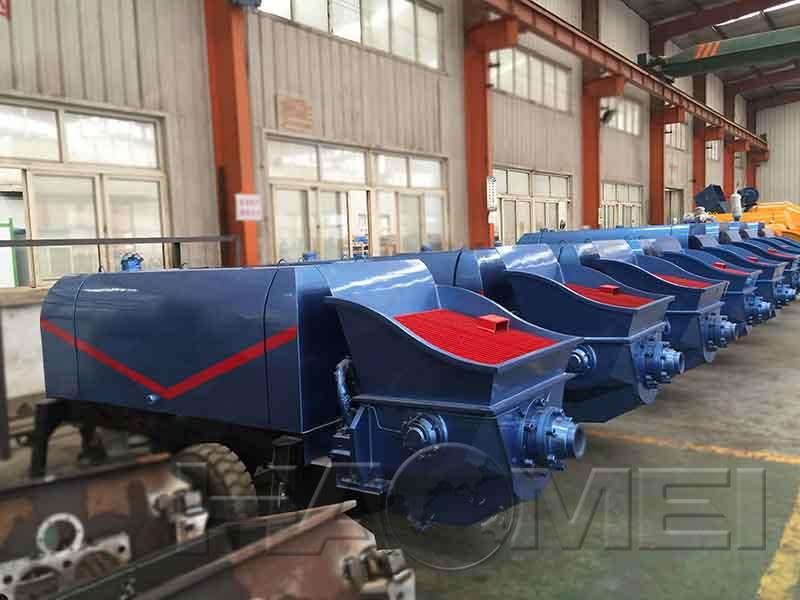
When comparing offers, request a written scope. The quotation should list pipe length, elbows, hose diameter, clamps, gaskets, sponge balls, tool kit, remote controller, lubricating pump, and wearing parts. Missing accessories can change the real purchase cost by thousands of dollars.
Inspection steps for a used unit:
- Run the pump with water, then with a concrete test if possible.
- Measure hydraulic pressure under load and compare it with the manufacturer setting.
- Inspect the S-valve or rock valve for wear, cracks, and poor sealing.
- Check delivery cylinders for scoring and chrome damage.
- Review engine hours, service invoices, oil analysis if available, and fault history.
- Inspect frame welds, axle, tires, brakes, lights, outriggers, and tow coupling.
- Confirm the serial number and import documents.
- Price replacement wear parts before negotiating.
Financing decisions should include utilization. If the pump works only a few days per month, rental or subcontracted pumping may be cheaper. If it supports recurring slabs, foundations, block fill, and commercial pours, ownership can protect schedule and reduce subcontractor dependency.
For larger work, compare the purchase price with operating cost per cubic meter. Fuel, wear plates, cutting rings, hydraulic oil, delivery pipe, hose, cleaning labor, and standby time all matter. When evaluating an 80 m3/h class machine, a page focused on HBT80 Trailer Concrete Pump Cost can help structure quotation comparisons around capacity and ownership expenses.
Safe Operation, Compliance, and Market Trends
Concrete pumping is a high-pressure operation. A blockage can release stored energy suddenly, and hose whipping can cause severe injury. Safety planning must be part of equipment selection, not a training item added later.
Use recognized references. ASME B30.27 covers material placement systems, including concrete pumps, placing booms, and delivery systems. In the United States, OSHA 29 CFR 1926 Subpart Q applies to concrete and masonry construction, while employers must also follow general duties for safe work, training, and equipment condition. In Europe, EN 12001 addresses conveying, spraying, and placing machines for concrete and mortar.
Pre-pour safety checklist:
- Confirm operator competence and manufacturer manual availability.
- Set the pump on stable ground and deploy outriggers if fitted.
- Inspect clamps, safety pins, gaskets, hose ends, and reducers.
- Use rated components only; never mix unknown pipe and clamps.
- Secure end hoses and keep workers out of the discharge danger zone.
- Prime with an approved grout or pumping primer.
- Maintain communication between pump operator, hose crew, and ready-mix driver.
- Stop immediately if line vibration, pressure spikes, or flow interruption appears.
- Clean out using controlled procedures; never stand in front of a pressurized line.
Digitalization is changing purchase criteria. Telematics, remote diagnostics, fault codes, GPS location, and maintenance hour tracking are becoming common on premium machines. These features help fleet managers see utilization, schedule wear part replacement, and reduce unplanned downtime.
Emission rules are another major trend. Diesel pumps sold into regulated markets may need US EPA Tier 4 Final or EU Stage V compliant engines. These engines can reduce particulate matter and nitrogen oxides, but they add aftertreatment systems, sensors, and maintenance requirements. In urban work, electric pumps are gaining attention because they reduce local exhaust, noise, and fuel logistics when sufficient power is available.
Concrete mix trends also affect pump choice. Supplementary cementitious materials, manufactured sand, fibers, and low-carbon mixes can change friction and bleeding behavior. Before committing to a machine, run a trial with the actual mix, pipeline length, hose setup, and placing crew.
A strong purchase file should include the specification sheet, pressure-output curve, parts list, warranty terms, emission certificate, operator manual, service schedule, and supplier references. This paperwork is not administrative clutter; it is what protects uptime, resale value, and compliance during real pours.
Original source: https://www.concrete-pump-cn.com/a/trailer-mounted-concrete-pump.html
Tags: trailer mounted concrete pump, towable concrete pump, concrete line pump,
Previous: How Much Does a Concrete Pump Truck Cost?
Next: Towable Concrete Pump