

 feedom@haomei-machinery.com
Ready Mix Pump Truck VS Small Concrete Mixer And Pump
Posted On: 17/07/2026 | Posted by: Haomei Concrete Pumps
In the field of concrete construction, choosing the right equipment can increase project efficiency by half and significantly reduce costs. Ready mix concrete pump trucks and small concrete mixing pumps are currently the two most commonly used pieces of equipment in construction, and many project managers often struggle with the choice when purchasing or renting them. What are the differences between them?
I. Comparison of Core Functions
1. Ready-mixed concrete pump truck: Also known as a boom pump truck, it can only transport ready-mixed concrete and has no mixing capability, requiring a commercial concrete plant. Its hydraulic boom can flexibly extend and rotate, reaching a maximum length of tens of meters, allowing direct pouring over obstacles without the need for pipeline laying. The theoretical pumping capacity of conventional models is 50-100 m³/h, with stable continuous pumping, reducing cold joints during construction, and requiring only one operator. However, it has high requirements for concrete quality; segregation and substandard slump can easily clog the pipes.
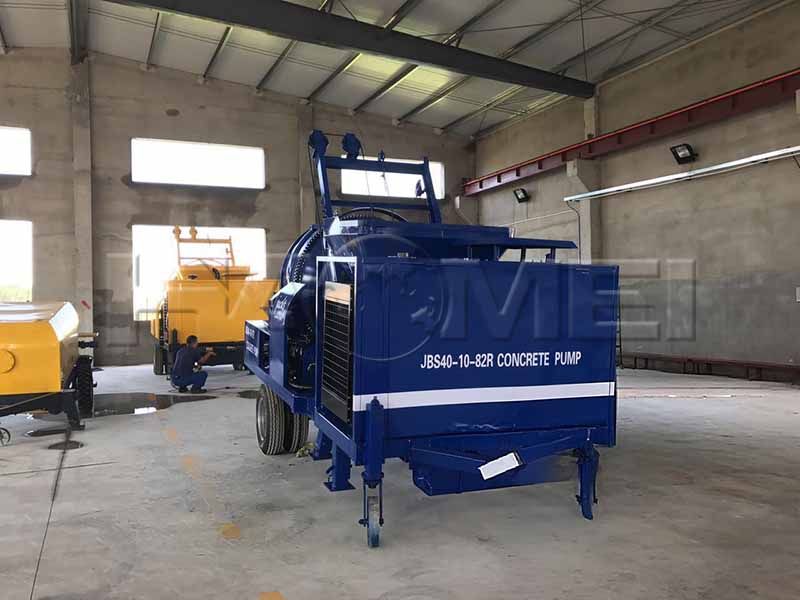
2. Small concrete mixing pump: Integrates mixing and pumping, eliminating the need for a commercial concrete plant. It can directly pump qualified concrete after mixing raw materials such as sand, gravel, and cement on-site, achieving one-stop operation. It can adjust the mix ratio and slump according to needs, making it highly adaptable and even suitable for narrow spaces through pipeline installation. However, its efficiency is relatively low, with standard models having a pumping capacity of 20-60 m³/h, requiring 2-3 workers to complete the processes of feeding, mixing, and pumping.
II. Comparison of Applicable Projects
1. Ready-mixed concrete pump truck: Suitable for large-scale projects with high volume and efficiency requirements, such as the main structure pouring of large high-rise buildings, municipal bridges, roads, stadiums, large industrial plants, and commercial complexes.
These projects have open sites, facilitating boom deployment, and readily available ready-mixed concrete is readily available. However, it has strict site requirements; its advantages cannot be fully realized in narrow spaces or when ready-mixed concrete transportation is inconvenient.
2. Small concrete mixing pump: Primarily characterized by flexibility and self-sufficiency, suitable for small, remote, or site-restricted projects, such as rural self-built houses, town villas, small-scale municipal repairs, mountain roads, and small-scale water conservancy projects, as well as enclosed sites such as tunnels and basements.
These projects have small volumes, insufficient ready-mixed concrete coverage, or high transportation costs. The small size of the equipment and the ability to mix on-site can significantly reduce costs and avoid concrete waste.
III. Price Comparison
1. Ready-mixed concrete pump truck: High purchase cost. New 30-40 meter boom models cost $110,000-$280,000, high-end models exceed $400,000, and used ones cost $40,000-$140,000. Operating costs include ready-mixed concrete ($45-$75/m³), fuel ($30-$75/hour), professional operator salary ($1100-$1700/month), and annual maintenance costs of $3000-$7000. Rental fees are $110-$280 per day, suitable for short-term large-scale projects.
2. Small concrete mixer and pump: Affordable purchase price. New models cost $11,000-$42,000, and used ones cost $4000-$21,000. Low operating costs. On-site mixing materials are $15-$30 cheaper per m³ than ready-mixed concrete, fuel costs are $15-$45/hour, and it can be operated by ordinary workers ($700-$1100/month). Annual maintenance costs are $700-$2100. The daily rental fee is $40-$110, suitable for short-term use of small projects.
Original source: https://www.concrete-pump-cn.com/a/ready-mix-pump-truck-vs-small-concrete-mixer-and-pump.html
Tags: concrete mixer and pump,
Previous: Big Concrete Pumps
Next: Truck Mounted Concrete Pump for Sale