

 feedom@haomei-machinery.com
Ready Mix Concrete Pump
Posted On: 25/08/2026 | Posted by: Haomei Concrete Pumps
A ready mix concrete pump transfers fresh concrete from a mixer truck or hopper to the placing point through pipeline. It is widely used for foundations, slabs, retaining walls, bridges, tunnels, and high-volume structural work. For construction equipment purchasers, the right machine is not defined by maximum output alone. Pumping pressure, pipeline distance, concrete mix compatibility, power source, and service access all affect productivity and lifetime operating cost.
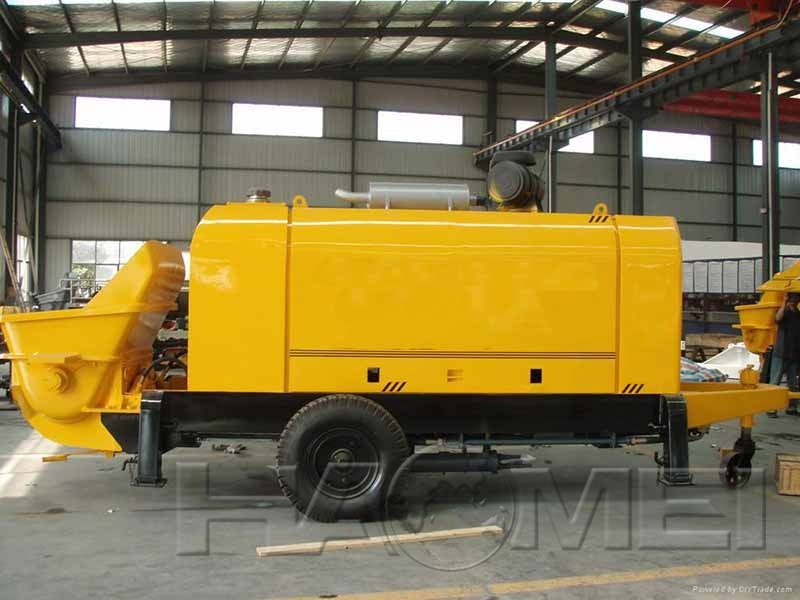
Design Features That Support Stable Concrete Delivery
A modern concrete pumping unit commonly uses a hydraulic pumping system, an S-valve or equivalent distribution valve, material cylinders, concrete cylinders, a hopper, and a control system. During operation, hydraulic cylinders drive the concrete pistons alternately. One cylinder draws material from the hopper while the other pushes concrete into the delivery pipeline. The valve switches between cylinders to maintain continuous flow.
The pumping system should be matched to the project. High-pressure models suit long horizontal pipelines, tall structures, or restrictive aggregate conditions. Larger-output machines are useful where continuous supply and large placement volumes are required. However, operating a pump at its maximum rated output for long periods may accelerate wear if the mix, pipe diameter, or jobsite arrangement is unsuitable.
A trailer-mounted unit offers flexible positioning and is usually practical for projects where the pump remains in one area for extended pours. A truck-mounted line pump provides faster relocation between multiple work zones. For compact sites, a Line pump can place concrete through flexible hose and pipeline routes that are difficult for mixer trucks to reach directly.
Important Design Components
| Component | Design Purpose | What to Inspect Before Purchase |
|---|---|---|
| Hydraulic system | Supplies controlled force to the pumping cylinders | Pump brand, pressure rating, cooling arrangement, hose protection |
| S-valve and wear plate | Directs concrete flow between cylinders | Wear-resistant alloy, lubrication points, replacement accessibility |
| Hopper and agitator | Keeps concrete moving and reduces segregation | Hopper capacity, agitator blade condition, protective grate |
| Concrete cylinders | Draw and discharge material in alternating cycles | Cylinder coating, piston sealing design, service life |
| Electrical controls | Manage pumping, reversing, and emergency functions | Clear display, remote control option, emergency stop function |
| Pipeline outlets | Connect delivery pipes and hoses securely | Clamp quality, pressure rating, gasket availability |
Why Material Selection Matters
Concrete is abrasive, especially when it contains hard aggregate, manufactured sand, or low-slump mixes. Components exposed to constant material flow must resist abrasion and impact. Wear plates, cutting rings, S-valves, delivery elbows, and pipe sections are therefore critical to equipment reliability.
High-chromium alloy materials are commonly used for wear parts because they offer strong abrasion resistance under repeated concrete flow. Chromium-plated concrete cylinders can improve resistance to surface wear and corrosion when properly maintained. Hardened delivery pipes and elbows are particularly valuable on jobs with long pipelines, frequent bends, or higher pumping pressure.
The frame and hopper should use robust structural steel with sound welding quality. A rigid chassis helps prevent vibration-related fatigue during pumping. Protective paint or corrosion-resistant surface treatment is also important when equipment will operate in coastal, rainy, or chemically aggressive environments.
Material quality is not only about hardness. Parts must be accurately machined and matched. A poorly fitted cutting ring and wear plate, for example, can cause pressure loss, reverse flow, and rapid component damage even if both pieces are made from high-grade alloy.
For projects requiring flexible power arrangements, a Diesel Electric Concrete Pump can support work across sites with different power availability. Diesel power is useful where grid electricity is unavailable, while electric operation can reduce on-site noise and exhaust emissions where suitable power is present.
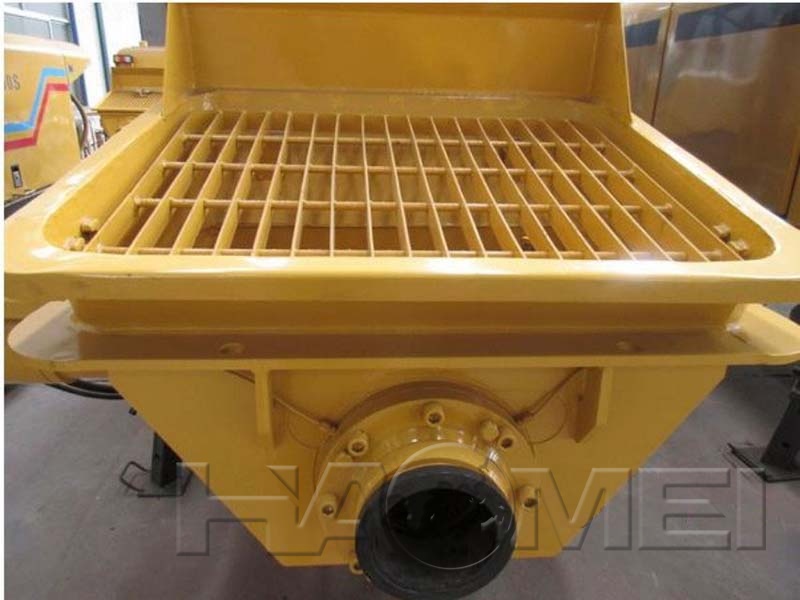
Operating Advantages and Common Problem Solutions
Using a concrete pump can reduce manual handling, shorten placement time, and improve access to confined or elevated work areas. Concrete can be delivered over obstacles, into basements, across long foundations, or through planned pipeline routes. This helps crews maintain a steadier placing rate and may reduce segregation caused by repeated rehandling.
To achieve these benefits, the concrete mix must remain pumpable. Aggregate size must suit the delivery pipe diameter, and the mix needs sufficient mortar and workable consistency to lubricate the pipeline. Excessively dry material, oversized aggregate, poorly graded sand, or delayed concrete can increase blockage risk.
| Problem | Likely Cause | Practical Solution |
|---|---|---|
| Pipeline blockage | Dry mix, poor grading, oversized aggregate, inadequate priming | Stop pumping promptly, reverse briefly if permitted, inspect the line, use approved priming mortar, and verify mix design |
| Low pumping pressure or output | Worn pistons, hydraulic leakage, blocked filter, incorrect valve adjustment | Check hydraulic oil level and temperature, inspect seals and filters, examine piston wear, and test valve clearances |
| Excessive pressure fluctuation | Air entering the system, unstable feed in hopper, worn wear parts | Keep hopper supplied, check suction connections, inspect wear plate and cutting ring, and confirm agitator operation |
| Concrete leakage at pipe joints | Damaged gasket, loose clamp, worn coupling | Depressurize the system, replace damaged seals, fit rated clamps, and secure each joint before restarting |
| Hydraulic oil overheating | Dirty cooler, low oil level, prolonged high-pressure operation | Clean the cooler, use the specified hydraulic oil, check fan operation, and reduce unnecessary high-pressure cycling |
| Pump does not reverse normally | Electrical fault, sensor issue, directional valve problem | Check emergency stop status, fuses, wiring connections, control signals, and hydraulic directional valve condition |
Before each shift, inspect hydraulic oil, engine or motor condition, hopper grate, agitator, pipeline clamps, gaskets, and emergency stop devices. Lubricate moving points according to the manufacturer maintenance schedule. After every pour, clean the hopper, valve area, and delivery pipeline thoroughly. Hardened residual concrete is one of the most avoidable causes of downtime and expensive wear-part replacement.
Safe operation is equally important. Never open a pipeline clamp while the system is pressurized. Keep personnel away from hose ends during pumping and cleaning. Use delivery pipes, clamps, and hoses rated for the machine's working pressure, and replace damaged components immediately. A disciplined inspection routine, compatible concrete supply, and correct pipeline setup will allow the equipment to deliver consistent performance across demanding construction applications.
Original source: https://www.concrete-pump-cn.com/a/ready-mix-concrete-pump.html
Tags: Ready Mix Concrete Pump, Concrete Trailer Pump,
Previous: Tow Behind Concrete Pump
Next: Electric Concrete Pump