

 feedom@haomei-machinery.com
Electric Concrete Pump
Posted On: 27/08/2026 | Posted by: Haomei Concrete Pumps
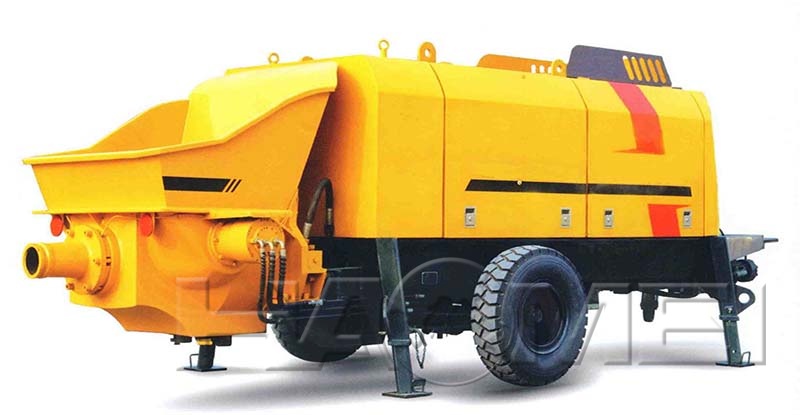
An electric concrete pump is usually a stationary or trailer-mounted piston pump powered by an electric motor. It moves ready-mix concrete through delivery pipelines to the point of placement. It can reduce local diesel exhaust and engine noise, but it is only productive when the site electrical supply, concrete mix, pipeline layout, and cleaning plan are matched correctly.
Do not assume that electric means battery powered. In current construction equipment terminology, it commonly means mains-powered equipment. A diesel-electric unit may also use an electric motor drive with a diesel generator or engine-based power source. Confirm the prime mover, input voltage, frequency, installed motor power, and generator requirements on the supplier's data sheet before procurement.
Select Capacity From the Pour Plan
Start with the placing rate, not the advertised maximum output. Theoretical output is measured under controlled conditions and can be reduced by concrete consistency, aggregate grading, pipeline diameter, vertical lift, bends, hose length, and wear.
Use this first-pass calculation:
Required placing rate = planned concrete volume / available placing time
Add a practical allowance for mixer-truck changeovers, pump priming, line cleaning, finishing coordination, and any planned stoppages. If a slab needs 60 m3 in four hours, the base rate is 15 m3/h. Specifying a machine solely because its catalog output exceeds 15 m3/h leaves little operating margin. Ask for a pump curve and confirm achievable output at the expected delivery pressure.
| Selection item | What to verify | Why it matters |
|---|---|---|
| Pump output | Rated theoretical output, output at working pressure, strokes per minute | Prevents selecting on a single high catalog number. |
| Delivery pressure | Maximum pressure and expected pressure loss through the line | Long runs, vertical sections, and restrictive bends increase resistance. |
| Pipeline | Diameter, wall thickness, clamp rating, bends, reducers, end hose | All components must be pressure-compatible. |
| Concrete mix | Maximum aggregate size, slump or flow class, admixtures, fines content | Poorly pumpable mixes increase blockage risk. |
| Electrical input | Voltage, phase, frequency, locked-rotor or starting demand | Avoids voltage drop, nuisance trips, and undersized generators. |
| Site movement | Trailer dimensions, towing approval, access, leveling area | Determines whether a stationary unit can be positioned safely. |
For short-to-medium delivery distances, a Line pump is often the practical configuration because the pipeline can follow corridors, foundations, tunnels, and restricted-access sites. For applications that cannot rely on permanent mains power, evaluate a Diesel Electric Concrete Pump against fuel availability, ventilation, emissions restrictions, and generator noise limits.
Match Electrical Supply Before Delivery
The electrical installation is a project constraint, not an accessory. Obtain the equipment nameplate data and give it to the qualified electrical contractor. Confirm the source capacity, breaker and cable sizing, earthing or grounding arrangement, connector type, and protective-device coordination.
Voltage drop is especially important when a temporary distribution board is far from the pump. Long undersized cables can reduce motor starting performance and overheat conductors. Electrical work should follow the applicable local code. In the United States, this normally includes the National Electrical Code, NFPA 70, while electrical safe-work practices are addressed by NFPA 70E. Requirements vary by jurisdiction and project specifications.
Set Up the Pump and Pipeline Safely
A reliable pour depends on preparation before the first truck arrives. The pump must sit on firm, level ground with clearance for hopper loading, operator access, and emergency movement. Support the pipeline so its weight, vibration, and movement do not load formwork, scaffold, or unapproved structures.
Use this pre-pour checklist:
Review the line route, including high points, steep rises, bends, reducers, and the discharge zone.
Verify pipe, couplings, gaskets, clamps, and retaining pins are compatible with the pump's stated pressure.
Inspect for thin pipe wall, damaged welds, cracked clamps, and worn end hose. Replace questionable components before pressurization.
Confirm the mix design is pumpable. A sudden change in aggregate, slump, or admixture dosage can change pumping behavior.
Establish communication between the pump operator, hose handler, batch plant, and placement crew.
Barricade the line and keep personnel away from couplings, elbows, and the end hose while pressure is present.
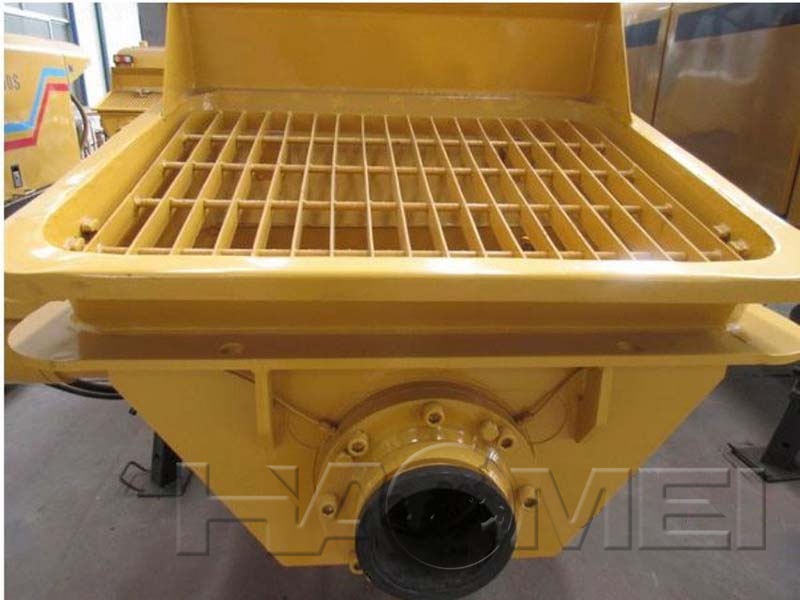
Test emergency-stop functions and confirm the hopper grate and agitator guards are in place.
Plan washout, water supply, disposal, and pipeline cleaning before pumping begins.
OSHA 29 CFR 1926.701 covers concrete and masonry construction requirements, including inspection of equipment and tools before use. OSHA also requires employee training for recognizing and avoiding unsafe conditions under 29 CFR 1926.21. For machinery and pipeline operation, follow the manufacturer operating manual, project-specific lift and traffic controls, and local regulations.
Never open a coupling or remove a blockage while the system is pressurized. Stop the pump, isolate energy, relieve pressure using the approved procedure, and verify zero pressure before work begins. The hopper, agitator, and remote controls create additional pinch-point and unexpected-start hazards. Apply the site's lockout or tagout procedure where maintenance requires exposure to moving parts.
Compare Investment, Operating Cost, and Market Direction
Electric equipment can lower site emissions and eliminate routine diesel-engine service items, but its financial case depends on utilization and power access. Request itemized proposals instead of relying on a purchase price alone.
| Cost area | Electric-drive consideration | Decision question |
|---|---|---|
| Initial equipment | Motor, controls, trailer, pipeline package, remote control | Is the quoted configuration complete for the planned line length? |
| Temporary power | Distribution board, cable, protection, generator if needed | Does the site already have sufficient three-phase supply? |
| Energy | Electricity tariff, demand charges, generator fuel where applicable | What is the cost per pumping hour at expected utilization? |
| Maintenance | Hydraulic oil, wear parts, cylinders, valves, pipeline, electrical inspections | Is local service support trained on the drive and controls? |
| Downtime | Power outages, cable damage, concrete supply interruptions | Is there a documented backup-power and washout plan? |
| Residual value | Local demand for electric and hybrid equipment | Can the unit be redeployed across similar sites? |
Calculate total ownership cost over the expected holding period: acquisition cost, financing, transport, temporary power, energy, preventive maintenance, wear parts, repairs, labor, insurance, and resale value. Divide this by expected productive pumping hours, then compare it with rental or subcontracted placement costs. This exposes whether a lower-priced unit becomes expensive because it needs major electrical upgrades or spends too much time idle.
Industry demand is being shaped by urban noise restrictions, indoor and tunnel work, decarbonization targets, and digitized fleet management. When comparing models, prioritize practical data functions: hour meters, fault-code history, hydraulic pressure monitoring, remote diagnostics, geofencing where appropriate, and exportable maintenance records. These records support preventive service, warranty claims, utilization tracking, and safer handover between crews.
For acceptance testing, document the date, mix details, pipeline configuration, ambient conditions, actual volume placed, pumping time, stoppages, energy use, and faults. A short commissioning record built from real site conditions is more useful for future equipment planning than a maximum-output claim alone.
Standards and Documents to Request
Request the operator manual, maintenance schedule, electrical schematic, declaration of conformity where applicable, pressure ratings for all delivery-line components, and local compliance documentation. For concrete placement practices, consult American Concrete Institute ACI 304R, Guide for Measuring, Mixing, Transporting, and Placing Concrete. For electrical work, use the locally adopted electrical code and a qualified electrician's installation records.
Original source: https://www.concrete-pump-cn.com/a/electric-concrete-pump.html
Tags: Electric Concrete Pump, Concrete Line Pump,
Previous: Ready Mix Concrete Pump
Next: Cement Mixer With Pump