

 feedom@haomei-machinery.com
Concrete Mixer Truck With Pump
Posted On: 21/09/2026 | Posted by: Haomei Concrete Pumps
A concrete mixer truck with pump combines concrete mixing and pumping in one mobile unit. Recent English-language Q&A discussions commonly focus on whether this equipment can replace separate mixers and pumps, how far it can deliver concrete, and what operating conditions affect productivity.
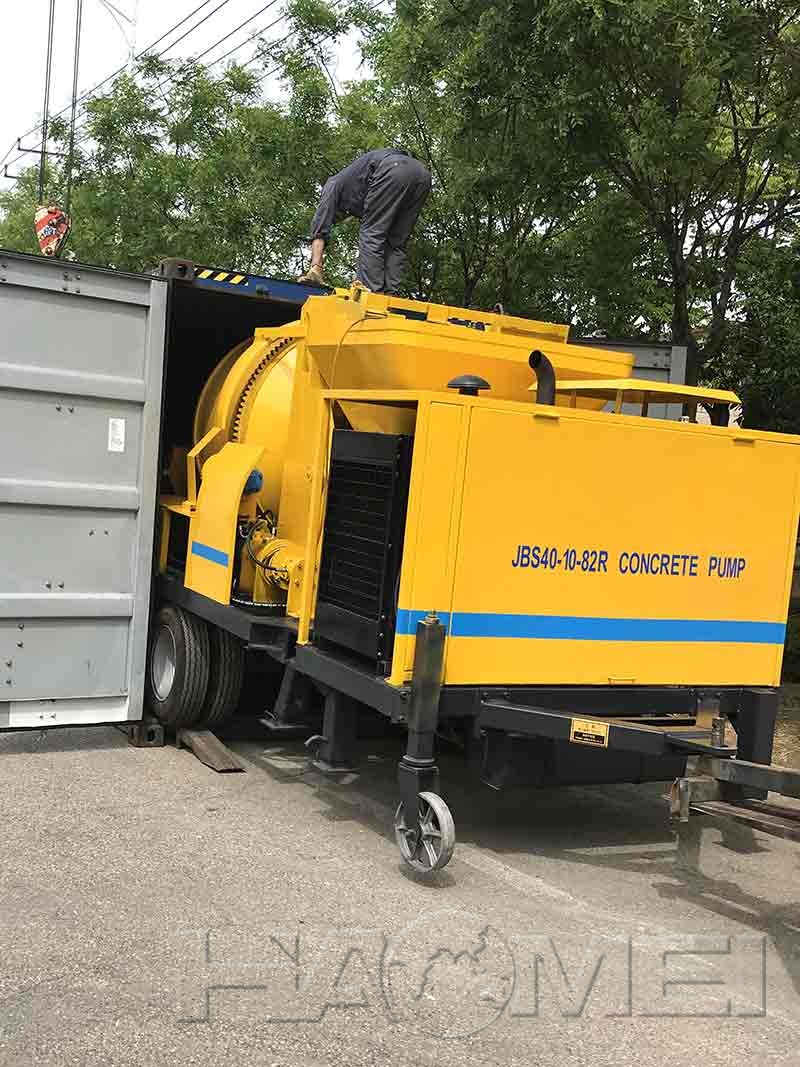
The right machine depends on the concrete volume, aggregate size, delivery distance, access conditions, and available power or fuel. The following questions address the practical concerns that often arise before a new equipment purchase.
| Question | What Matters Most |
|---|---|
| Can one unit mix and pump concrete efficiently? | Output matching between mixer, pump, and crew |
| How far can it pump? | Vertical height, horizontal distance, hose diameter, and concrete mix |
| Is it suitable for small sites? | Vehicle access, setup space, and batch volume |
| What mix can be pumped? | Aggregate grading, slump, additives, and fiber content |
| What operating costs should be expected? | Fuel, wear parts, cleaning, labor, and maintenance |
1. Can a Concrete Mixer Truck With Pump Replace Separate Equipment?
Question often asked: "Can a concrete mixer truck with pump mix and place concrete at the same time?"
Yes, in many residential, agricultural, and medium-scale commercial applications, one integrated unit can eliminate the need for a separate mixer plus stationary pump. The mixer prepares the concrete while the pumping system sends it through delivery pipes or hoses to the pour location. This arrangement can reduce material handling and keep concrete moving more consistently when the site crew is properly organized.
However, the machine is not automatically the best option for every pour. Large slab projects with continuous ready-mix deliveries may benefit from a dedicated boom pump because its output and placing reach can be significantly higher. An integrated mixer-pump unit is often more practical where ready-mix delivery is limited, access is difficult, or the project needs multiple smaller batches.
When comparing configurations, check whether the manufacturer's stated output is theoretical or based on usable job-site conditions. Pumping output can fall when the concrete is stiff, the pipe route has many bends, or the crew cannot keep the hopper supplied. A Concrete Mixing Pump is especially useful when the project needs self-produced concrete rather than repeated truck deliveries.
2. How Far and How High Can It Pump Concrete?
Question often asked: "What pumping distance can I expect from a concrete mixer truck with pump?"
Pumping distance is not determined by one specification alone. Manufacturers may list a maximum horizontal distance and maximum vertical height, but actual reach depends on the mix design and the pipeline layout. Every bend, reducer, vertical riser, and hose section adds resistance.
For example, a short, mostly straight hose route with a workable mix may allow the machine to perform close to its rated capacity. A route up several floors with narrow hoses, multiple elbows, and low-slump concrete may require a lower pumping rate. Contractors should plan the pipe route before selecting a model, rather than relying only on the highest published number.
Ask for pump pressure, cylinder diameter, stroke rate, and recommended pipe diameter. These details help indicate whether a unit is designed for short residential pours or longer, more demanding delivery lines. If your work involves narrow streets, remote foundations, or small building extensions, a Mini Concrete Mixer with Pump may offer easier positioning while retaining useful hose-delivery capability.
3. Is a Mixer Pump Truck Suitable for Small or Restricted Job Sites?
Question often asked: "Will a concrete mixer pump truck fit on a small construction site?"
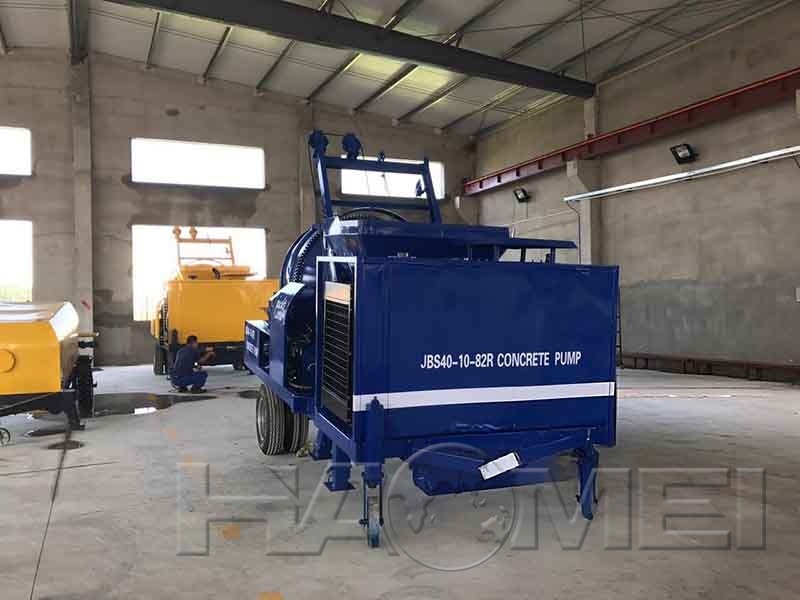
It can, provided that transport access and setup space are evaluated first. Small sites often create challenges beyond machine width. Consider turning space, ground bearing capacity, overhead cables, gate width, slope, hose-routing space, and safe washout access.
An integrated unit can be highly effective for rural homes, retaining walls, drainage work, fence foundations, and low-rise construction because it reduces the number of machines entering the site. Yet the equipment still needs a stable and reasonably level working area. Soft ground can affect safe positioning, while steep ramps may limit vehicle access and hopper loading.
Before ordering, measure the narrowest access point and identify where aggregate, cement, water, and the machine will be placed. If the machine mixes on site, there must also be room for material staging. A compact machine may solve access issues, but it should still provide enough drum capacity and pumping output for the planned daily volume.
4. What Type of Concrete Mix Can a Concrete Mixer Truck With Pump Handle?
Question often asked: "Can a mixer pump handle regular concrete, fiber concrete, or high-strength mixes?"
Most units are intended for pumpable concrete with properly graded aggregate and sufficient workability. The exact limits vary by model, especially maximum aggregate size. Oversized stone, poorly graded sand, dry material, or inconsistent water content can cause blockages and accelerate wear in the hopper, valve system, cylinders, and pipeline.
Fiber-reinforced concrete may be pumpable, but the fiber type, length, dosage, and mixing quality need careful control. High-strength concrete can also be pumped if its mix design provides the required flow characteristics. The objective is not simply to add more water. Excess water can weaken finished concrete and increase shrinkage. Instead, discuss slump, admixtures, aggregate grading, and target strength with the concrete technician.
A practical site check is to maintain a repeatable batching process. Measure water accurately, screen aggregate when necessary, and clean the hopper after each operating period. Consistency protects the pump and produces more predictable placement results.
5. What Are the Main Running Costs of a Concrete Mixer Truck With Pump?
Question often asked: "Are concrete mixer pump trucks expensive to operate and maintain?"
Operating costs depend on utilization. Fuel or electricity is only one part of the expense. Wear components such as spectacle plates, cutting rings, delivery pipes, hose couplings, pistons, seals, and agitator parts require scheduled inspection. Abrasive aggregate and poor cleaning routines can shorten their service life.
Labor planning also matters. A capable operator should monitor mix consistency, pumping pressure, lubrication, pipeline connections, and cleaning procedures. After pumping, the hopper and delivery line must be cleaned promptly. Hardened concrete inside a pipe can lead to costly downtime and safety risks during removal.
When comparing quotations, request details on standard accessories, spare-part availability, warranty coverage, training, hydraulic component brands, engine emissions requirements, and local service support. A lower initial price may be less attractive if essential hoses, remote controls, pipeline sections, or replacement parts are excluded from the package.
Original source: https://www.concrete-pump-cn.com/a/concrete-mixer-truck-with-pump.html
Tags: concrete mixer truck with pump, concrete mixer pump, concrete pumping equipment, mixer pump truck,
Previous: Concrete Mixer Pump Price
Next: