

 feedom@haomei-machinery.com

Concrete Mixer and Pump Truck
Posted On: 27/10/2026 | Posted by: Haomei Concrete Pumps
A concrete mixer and pump truck combines on-site mixing and concrete delivery through a pumping system. It can reduce dependence on ready-mix scheduling on remote, small-volume, or continuously changing projects. However, it is not automatically the lowest-cost choice. Output, aggregate quality, access, power supply, cleaning capacity, and local road rules determine whether the machine will perform reliably.
Before comparing models, define the equipment type precisely. A truck-mounted boom pump normally receives ready-mixed concrete from transit mixers and places it through a boom. A mixer-pump unit mixes batch materials and sends concrete through a line pump. Some mixer-pump units are trailer-mounted, while others are installed on a truck chassis. Do not compare these machines by engine power alone.
Match Equipment Capacity to the Actual Pour
Start with the required hourly placement rate, not the advertised maximum output. Calculate the volume needed during the fastest planned pour period, then allow for setup, hose moves, loading delays, cleaning, and operator breaks.
Use this planning check:
Required practical output = planned concrete volume / available placing time
If a slab needs 36 m3 over 4 hours, the theoretical minimum is 9 m3/h. Selecting a machine rated only slightly above that figure creates risk because real productivity falls when aggregate is damp, materials are loaded manually, the pipeline has multiple bends, or the mix is difficult to pump.
| Site condition | Equipment implication | Practical action |
|---|---|---|
| Small foundations, rural housing, repair work | Moderate output and compact footprint often matter more than high capacity | Select a compact mixer-pump configuration with accessible maintenance points |
| Long horizontal pipeline | Friction loss can limit delivery before rated output is reached | Obtain the supplier's pipe diameter, pressure, and distance calculation |
| High-rise or elevated placement | Vertical lift requires adequate pressure reserve | Confirm maximum theoretical pressure and approved pipeline layout |
| Ready-mix concrete is consistently available | Separate mixer capacity may be unnecessary | Compare a truck-mounted line or boom pump against a mixing unit |
| Unstable or narrow access roads | Chassis weight and turning radius become limiting factors | Verify axle loads, ground clearance, and local road restrictions |
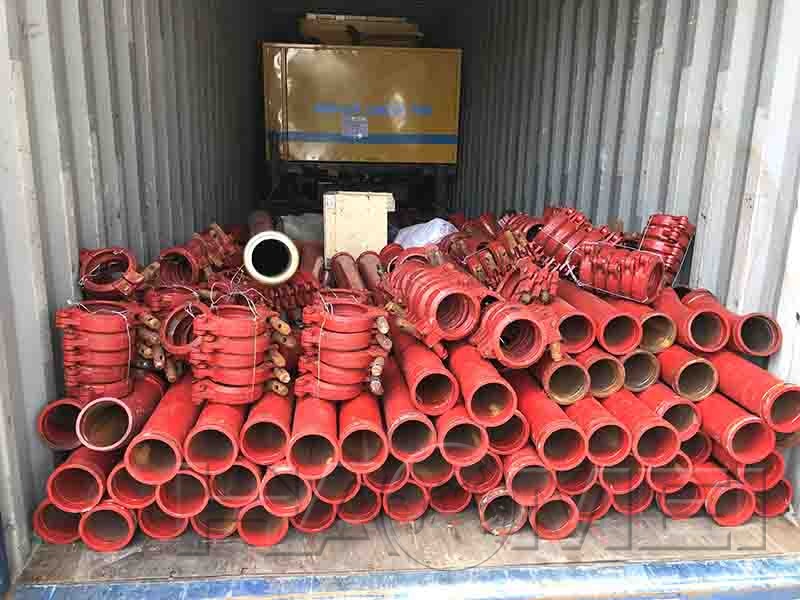
Ask the supplier for documented values for maximum theoretical concrete output, maximum concrete pressure, cylinder diameter and stroke, hopper volume, mixer type, aggregate size limit, pipeline diameter, and chassis gross vehicle weight rating. Nameplate output alone is not a production guarantee.
For projects that need integrated mixing and pumping rather than a boom system, compare a Concrete Mixing Pump with a conventional mixer plus separate line pump. The integrated option can reduce equipment transfers and coordination, but it also places mixing and pumping uptime in one machine. A breakdown may stop the entire concrete operation.
Compare Configuration, Cost, and Compliance
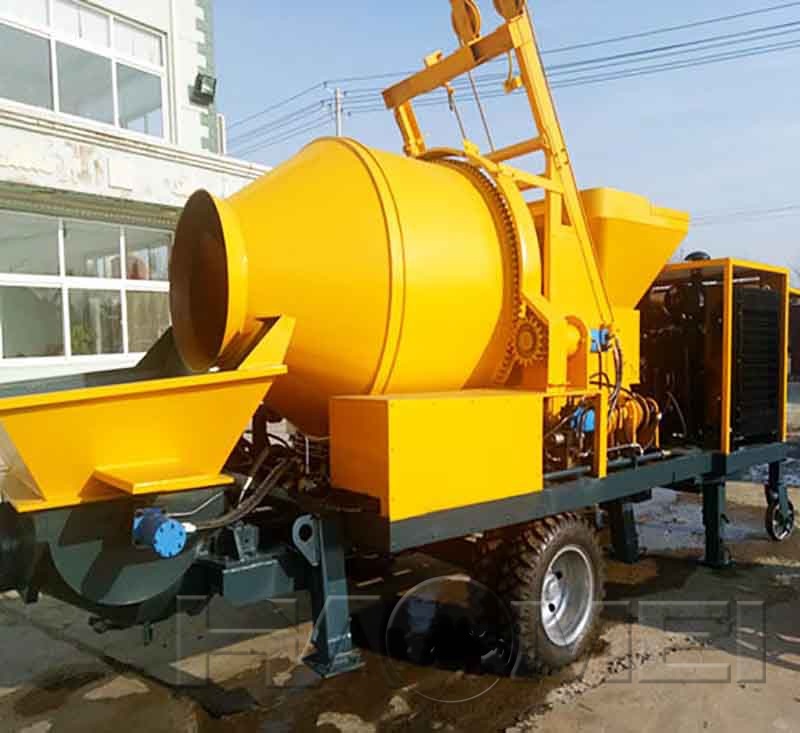
A truck chassis improves mobility between sites, but raises road-registration, driving-license, insurance, and maintenance requirements. Trailer units are usually easier to position on confined projects, although they require a suitable towing vehicle and separate mobilization planning.
| Configuration | Best fit | Strengths | Limits to investigate |
|---|---|---|---|
| Truck-mounted mixer-pump | Contractors moving between multiple short-duration projects | Faster relocation, self-contained transport | Road legality, axle loading, chassis service access, higher fleet administration |
| Trailer mixer-pump | Fixed or semi-fixed sites with a towing vehicle | Compact transport package, easier replacement of tow vehicle | Towing compliance, setup time, separate vehicle availability |
| Truck-mounted boom pump | Larger placements supplied by ready-mix trucks | Long reach and rapid placing | Higher purchase and maintenance exposure, outrigger space, trained boom operation |
| Mixer plus stationary line pump | Larger batching area with repetitive work | Independent mixer and pump maintenance | More equipment moves and more site space |
Do not treat purchase price as the investment figure. Request an itemized quotation separating the base machine, chassis, boom or pipeline accessories, remote control, spare wear parts, commissioning, transport, training, warranty, and tax. Prices vary materially by country, emissions tier, chassis brand, pumping pressure, and included pipeline, so a generic online figure is not reliable for capital approval.
Evaluate ownership with a five-year model:
Annual ownership cost = depreciation + finance cost + insurance + licensing + scheduled maintenance + major wear parts + downtime allowance
Then add hourly operating cost for fuel or electricity, labor, lubricants, water, cleaning materials, pipeline wear, and concrete waste. Compare this result with hired pumping rates and the cost of missed pours. Require suppliers to identify normal replacement intervals for wear plates, cutting rings, S-valves or gate valves, agitator components, mixer paddles, delivery cylinders, and pipeline elbows.
For a smaller, access-sensitive fleet, a Mini Concrete Mixer with Pump may suit low-volume placements. Confirm that its hopper, aggregate limit, and pressure are compatible with the specified concrete before committing to the purchase.
In the United States, commercial vehicles are subject to applicable Federal Motor Carrier Safety Regulations, including periodic inspection requirements under 49 CFR Part 396.17. State and local rules may impose additional registration, axle-weight, route, and operator requirements. Confirm these obligations before specifying a truck chassis.
Set Up Safe, Repeatable Pumping Work
Concrete pumping combines pressurized delivery lines, rotating equipment, vehicle movement, wet cement exposure, and overhead hazards. Build the operating method around the manufacturer's manual and the actual site layout.
The concrete mix must be pumpable. Aggregate gradation, maximum aggregate size, cementitious content, admixtures, slump or flow, temperature, and delivery time affect line pressure and blockage risk. ASTM C94/C94M covers ready-mixed concrete requirements, while ACI 304R addresses placing concrete. These documents support mix and placement planning, but they do not replace the pump manufacturer's limits.
Use this pre-pour checklist:
- Confirm the machine is on firm, level ground within the manufacturer's permitted slope.
- Check all clamps, gaskets, pins, pipe supports, hoses, and safety retaining devices before pressurizing the line.
- Establish an exclusion zone around hoses, couplings, moving parts, and any boom or outrigger area.
- Keep personnel away from the discharge end during priming, pumping, and line cleaning.
- Verify communication between the mixer loader, pump operator, and placing crew.
- Follow the manufacturer's approved priming and shutdown procedure. Do not use unapproved objects or body parts to clear blockages.
- Wash out before residual concrete hardens, and collect wash water in accordance with the project environmental plan.
OSHA construction rules require equipment operated near overhead power lines to maintain prescribed clearances. Under 29 CFR 1926.600(a)(6), equipment must generally stay at least 10 ft from energized overhead lines rated 50 kV or below, with greater clearance at higher voltages. Site management should identify lines before positioning the truck, boom, or pipeline and follow the applicable utility and jurisdictional controls.
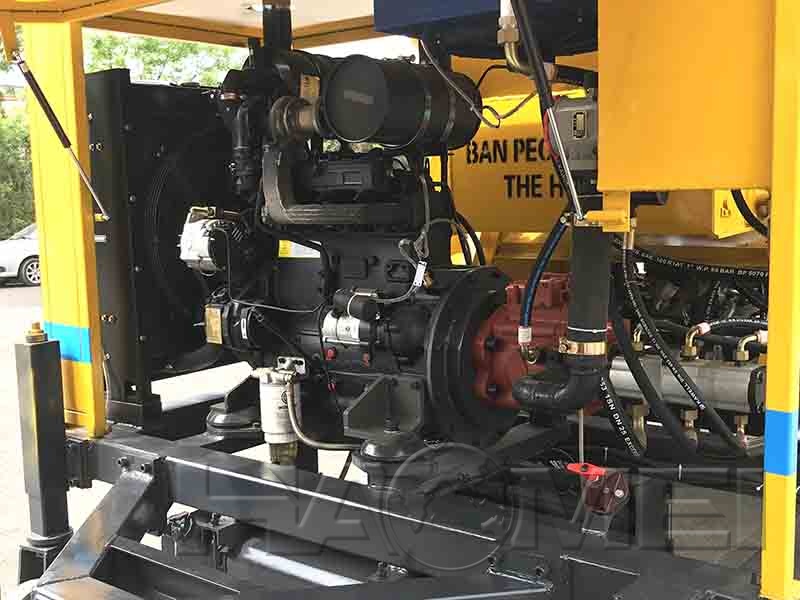
Require an acceptance test before final payment. Record the serial numbers, chassis VIN, engine emissions label, pump pressure setting, mixer rotation, remote-control function, emergency stops, water system, lighting, brakes, tire condition, pipeline inventory, safety decals, and delivered manuals. Run a documented pumping trial using the intended aggregate and pipeline arrangement. This creates a baseline for future maintenance, warranty claims, operator training, and fleet utilization records.
Original source: https://www.concrete-pump-cn.com/a/concrete-mixer-and-pump-truck.html
Tags: Concrete Mixer and Pump Truck, Concrete Mixing Pump,
Previous: Concrete Pump Truck Price
Next: