

 feedom@haomei-machinery.com

Concrete Pump Truck Price
Posted On: 21/10/2026 | Posted by: Haomei Concrete Pumps
A concrete pump truck is a major investment for contractors handling foundations, high-rise structures, bridges, and large commercial pours. The final concrete pump truck price depends on far more than boom length. Chassis brand, pumping output, hydraulic configuration, control system, emission standard, material quality, and local service support all affect the total purchase cost and long-term operating value.
A lower initial quotation may be attractive, but equipment selection should focus on matching the machine to jobsite requirements. A truck with insufficient boom reach, limited output, or difficult service access can create higher costs through lost productivity, repair downtime, and additional labor.
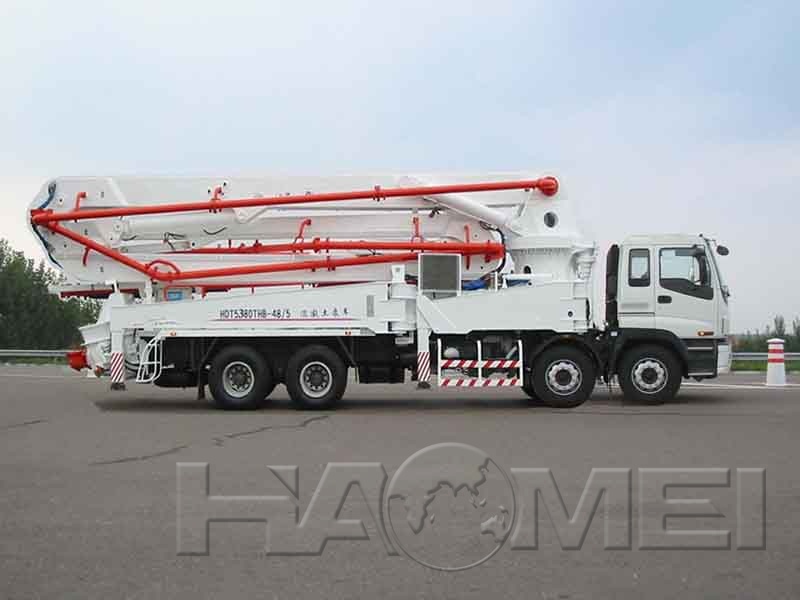
What Determines Concrete Pump Truck Price?
Boom length is one of the main cost drivers. Short-boom units, commonly used for low-rise housing and confined sites, generally require less structural steel and have lower chassis demands. Mid-range models are suitable for many commercial projects, while long-boom machines require stronger boom sections, more complex stabilization systems, and larger truck chassis.
For example, a 42m Concrete Pump Truck can provide a practical balance of reach, maneuverability, and pumping capacity for many urban construction projects. Larger units are better suited to wide foundations, tall structures, and sites where the truck must remain farther from the placing area.
| Price Factor | Why It Affects Cost | What to Check |
|---|---|---|
| Boom length and configuration | Longer booms need more steel, stronger joints, and higher stability capacity. | Reach diagram, unfolding space, boom section design. |
| Pumping output | Higher output requires larger cylinders, valves, and hydraulic capacity. | Theoretical output, pressure, cylinder diameter. |
| Chassis specification | A heavy-duty chassis supports boom weight and road transport loads. | Engine power, axle layout, payload rating, local compliance. |
| Hydraulic system | Efficient hydraulic design affects fuel use, heat control, and response. | Pump brand, cooling system, filtration, maintenance access. |
| Wear components | High-quality wear parts reduce shutdowns in abrasive concrete service. | Wear plate, cutting ring, delivery pipe, piston material. |
| Service availability | Fast parts supply and trained technicians reduce downtime. | Local inventory, warranty terms, diagnostic support. |
Transportation, import duty, registration, insurance, and commissioning may also affect the delivered equipment cost. Ask for a clearly itemized quotation that identifies the chassis, pump unit, boom configuration, included pipeline, remote control, spare parts, and warranty coverage.
Design and Material Features That Create Long-Term Value
Modern pump trucks combine a truck-mounted chassis, hydraulic pumping system, multi-section placing boom, hopper, delivery pipeline, and electronic controls. Each system must work together under high pressure and repeated load cycles.
The boom is typically fabricated from high-strength structural steel to improve strength while controlling overall weight. A lighter but properly engineered boom can improve stability, reduce chassis loading, and support smoother boom movement. Weld quality, stress-relief practice, boom pin design, and inspection procedures are important because the boom carries cyclic loads during every pour.
A Z-fold boom arrangement is widely used because it provides flexible placement around obstacles and can operate in relatively limited spaces. For projects that need greater horizontal reach, a 45 Meter Z Boom Concrete Pump may offer efficient coverage while retaining useful placement flexibility.
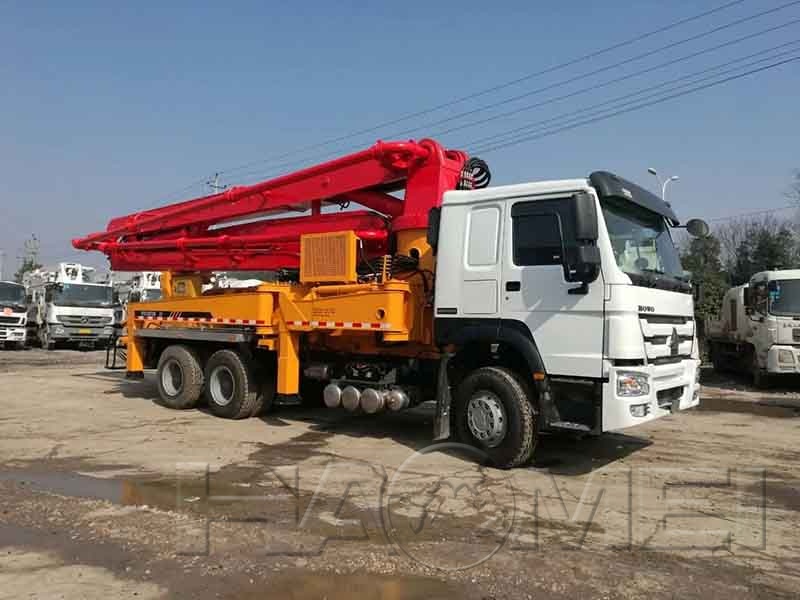
The pumping unit should use durable wear-resistant components in the concrete valve area. The wear plate and cutting ring are exposed to high-pressure, abrasive concrete flow. High-quality alloys and proper lubrication help extend service life. Chrome-plated concrete cylinders, robust pistons, and hardened delivery pipes also reduce wear when pumping mixes containing coarse aggregate.
Hydraulic design is equally important. A properly sized hydraulic oil cooler helps control operating temperature during continuous pumping. Clean hydraulic oil protects pumps, valves, and cylinders. Systems with accessible filters, readable gauges, and fault displays simplify daily inspection and reduce maintenance time.
Electronic controls provide another practical advantage. Remote control operation allows the operator to position concrete accurately while monitoring the end hose. Anti-overload functions, boom angle monitoring, and outrigger interlocks can improve operating safety when used according to the manufacturer instructions and site procedures.
Operating Benefits and Practical Troubleshooting
A pump truck can reduce manual handling, shorten concrete placement time, and improve access to areas that are difficult for transit mixers or wheelbarrows. Fast placement is especially valuable when concrete workability must be maintained across a large pour. Accurate boom positioning can also reduce rehandling and help crews place concrete closer to its final location.
Before pumping, confirm that outriggers are fully deployed on firm support, the boom has adequate clearance from structures and power lines, and the pipeline is securely clamped. Use a suitable priming mortar or approved lubricant according to the concrete supplier and equipment manufacturer requirements. Concrete mix design must be compatible with the pipeline diameter, pumping distance, and aggregate size.
| Problem | Likely Cause | Practical Action |
|---|---|---|
| Low pumping output | Restricted line, poor priming, worn pumping parts, or unsuitable mix. | Check pipeline bends and clamps, verify mix consistency, inspect wear components. |
| Pipeline blockage | Segregated concrete, long delay, oversized aggregate, or insufficient lubrication. | Stop pumping safely, relieve pressure, follow the manufacturer blockage-clearing procedure. |
| Boom movement is slow or jerky | Low hydraulic oil, clogged filter, incorrect oil temperature, or control issue. | Inspect oil level, filter condition, cooler operation, and error indicators. |
| Hydraulic oil overheating | Dirty cooler, sustained high load, low oil level, or cooling fan fault. | Clean the cooler, check fan and oil level, reduce abnormal loading. |
| Concrete leakage at hopper or valve area | Worn seals, loose fasteners, or damaged wear parts. | Shut down safely, inspect seals and fastening points, replace worn parts. |
Daily care has a direct effect on uptime. Wash the hopper and delivery system after each shift, inspect the wear plate and cutting ring at scheduled intervals, grease boom pins as specified, check hydraulic oil condition, and examine delivery pipes for thinning. Never open a pressurized pipeline or attempt to clear a blockage without following the equipment manufacturer's safety procedure.
When comparing machines, request documented specifications for maximum theoretical output, maximum concrete pressure, boom reach, delivery cylinder size, hopper capacity, and recommended aggregate size. A well-matched pump truck with verified material quality and dependable maintenance support can provide stronger jobsite productivity than a machine selected only for its initial cost.
Original source: https://www.concrete-pump-cn.com/a/concrete-pump-truck-price.html
Tags: Concrete Pump Truck Price, Concrete Boom Pump,
Previous: Best Applications For a 39m Concrete Boom Pump
Next: