

 feedom@haomei-machinery.com
Concrete Line Pump for Sale
Posted On: 15/05/2026 | Posted by: Haomei Concrete Pumps
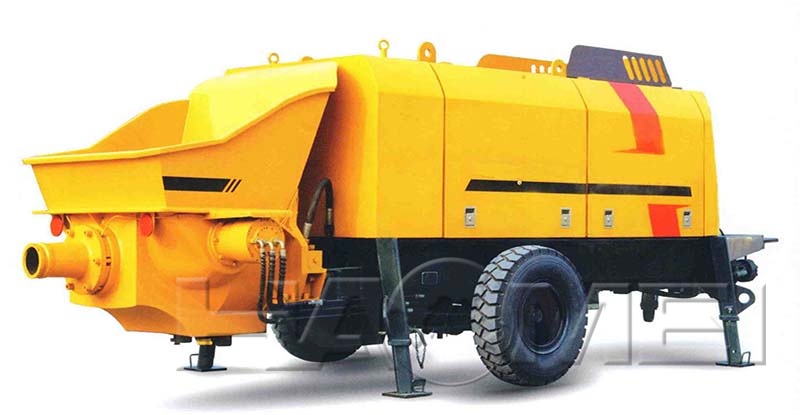
A concrete line pump for sale is often selected when a project needs steady concrete delivery through flexible hoses or steel pipelines, especially where a boom truck cannot easily reach. In simple terms, a line pump moves concrete from a hopper into a delivery line by hydraulic power, usually through twin pumping cylinders and an S-valve system on modern trailer-type machines. For contractors, the real value is not only pumping pressure or output, but also how the machine is built, how long wear parts last, and how quickly site teams can correct common faults.
Design and Material Details That Matter
A well-designed line pump starts with a rigid trailer frame or skid frame. The frame must handle vibration from the diesel engine or electric motor, reaction force from concrete flow, and frequent movement between sites. Many models use welded structural steel with reinforced stress points around the axle, hopper, and pumping unit. This improves stability during pumping and helps reduce fatigue cracks when the unit works on rough ground.
The pumping system is the heart of the equipment. A typical hydraulic piston pump uses two concrete cylinders working alternately. While one cylinder draws concrete from the hopper, the other pushes concrete into the pipeline. The S-valve changes position between strokes, allowing continuous flow. This design is widely used because it can handle ready-mix concrete with suitable aggregate size, while offering strong pressure for horizontal and vertical delivery.
Material selection has a direct effect on uptime. Wear plates and cutting rings are commonly made from high-hardness alloy steel or wear-resistant cast material. These parts work in direct contact with sand, stone, and cement paste, so hardness and surface finish are important. Delivery cylinders may use hard chrome plating or hardened inner surfaces to lower abrasion and protect piston seals. Hopper liners and mixing blades are also chosen for impact and abrasion resistance.
| Component | Common material choice | Practical advantage |
|---|---|---|
| Main frame | Welded structural steel | Stable support, better resistance to vibration |
| Wear plate and cutting ring | High-hardness alloy or wear-resistant cast steel | Longer service life in abrasive concrete |
| Concrete cylinder | Hard chrome plated or hardened bore | Lower friction and reduced seal wear |
| Hydraulic pipeline | High-pressure seamless tube and rated hoses | Safer oil flow under working pressure |
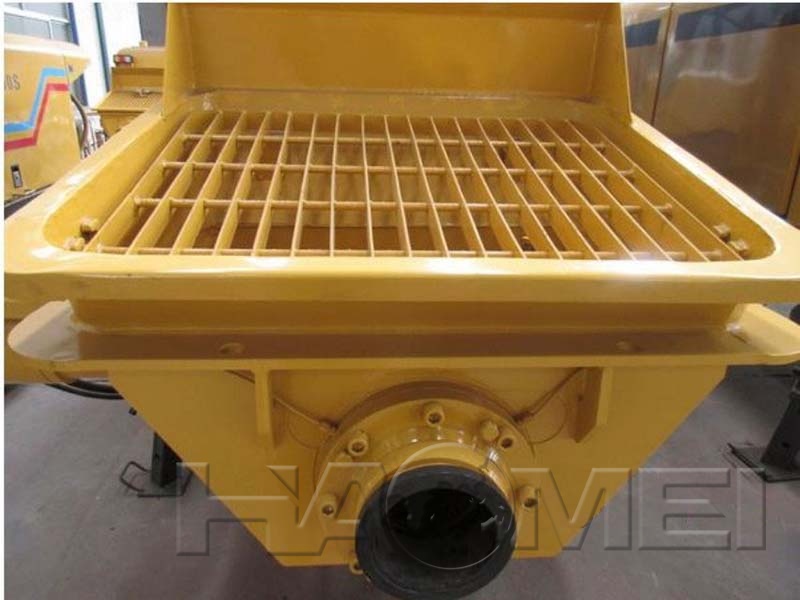
| Hopper grate | Reinforced steel grid | Helps stop oversized stones from entering the pump |
Control layout also matters. A clear control panel, pressure gauge, emergency stop, reverse pumping function, and wired or wireless remote control can help operators respond quickly. The reverse function is especially useful when early signs of blockage appear. For smaller sites or urban repair work, an HBTS40 Towable Concrete Pump can offer easier transport and practical output without occupying too much space.
Operating Advantages on the Jobsite
The first advantage is placement flexibility. A line pump can push concrete through hoses around corners, through doors, over narrow paths, and into areas where large trucks may not enter. This makes it suitable for foundations, floor slabs, driveways, tunnel lining support, retaining walls, and rural building work. The equipment can be positioned in a safe and convenient area while the hose end is moved to the pouring point.
Another advantage is controlled concrete delivery. Compared with manual wheelbarrow transport, pumping reduces labor intensity and helps maintain a more consistent placement rate. When concrete is placed smoothly, workers can focus on spreading, vibrating, and finishing. This can reduce cold joints caused by slow delivery, provided that the mix design, supply timing, and site coordination are properly managed.
Line pumps are also efficient for medium and small pours. A trailer unit can be towed to different sites, cleaned after operation, and prepared for the next job. Electric models are suitable where stable power is available and lower exhaust emissions are preferred. Diesel models are useful where grid power is limited. For projects that need higher output and longer delivery distance, a larger HBT100 Ready Mix Concrete Pump may be considered when the concrete supply and pipeline plan can support it.
| Site requirement | How the equipment helps |
|---|---|
| Narrow access | Hoses can be routed through restricted areas |
| Reduced manual handling | Less wheelbarrow movement and lower labor strain |
| Long horizontal delivery | Steel pipes and hoses can extend reach when properly supported |
| Frequent site transfer | Trailer style improves mobility |
| Accurate placement | Hose operator can direct flow near the final position |
To get these advantages, concrete must be pumpable. According to common concrete practice, pumpability depends on aggregate grading, cementitious content, water-cement ratio, admixtures, and slump. Operators should follow the mix supplier's recommendation and the pump manufacturer's manual. A mix that is too dry may block the line, while a mix with poor grading may segregate and cause pressure spikes.
Common Problems and Practical Corrections
Even strong equipment can face trouble when the mix, pipeline, or maintenance routine is not correct. The safest approach is to stop the machine, relieve pressure according to the operating manual, and check the system step by step. Never open a pressurized pipeline, and always use proper personal protective equipment around wet concrete and hydraulic parts.
| Problem | Likely cause | Practical correction |
|---|---|---|
| Pipeline blockage | Dry mix, poor aggregate grading, insufficient priming, sharp bends | Reverse pump briefly, locate pressure point, clean line safely, improve priming slurry and hose route |
| Low pumping output | Worn piston seals, leaking hydraulic pressure, slow engine speed | Inspect seals, check hydraulic oil level and pressure, verify engine throttle and filters |
| Concrete leakage at hopper outlet | Worn cutting ring or wear plate, incorrect adjustment | Inspect contact surface, adjust clearance as specified, replace worn parts |
| Excessive vibration | Uneven ground, loose support legs, unstable pipeline | Level the unit, secure outriggers, support pipes and reduce unsupported hose length |
| Hydraulic oil overheating | Dirty cooler, low oil, continuous high-pressure operation | Clean radiator or oil cooler, fill correct hydraulic oil, reduce blockage risk and check pressure settings |
| Remote control failure | Weak battery, damaged cable, signal interference | Replace or charge battery, inspect connectors, switch to panel control if approved |
Blockage prevention begins before pumping. Prime the pipeline with cement slurry or a suitable priming agent recommended by the manufacturer. Avoid sudden diameter changes, too many tight bends, and unsupported vertical lines. During work, keep the hopper filled above the agitator shaft when possible so air is not drawn into the pumping cylinders. If air enters the system, delivery may become uneven and the risk of blockage increases.
Wear parts should be inspected on a schedule, not only after failure. The cutting ring, wear plate, piston cups, delivery pipe elbows, rubber hoses, clamps, and seals all work under abrasive conditions. Elbows often wear faster than straight pipes because concrete changes direction there. Marking installation dates and checking wall thickness can help plan replacements before a leak or burst interrupts pouring.
Hydraulic maintenance is equally important. Use the specified oil grade, keep oil clean, and replace filters at the interval stated in the manual. Milky oil may indicate water contamination, while dark oil with a burnt smell can suggest overheating. Hydraulic leaks should be repaired early because low pressure can reduce pumping force and leaking oil creates a safety risk.
For daily operation, a simple routine works well: inspect clamps and hoses, confirm lubrication, test emergency stop, check water level and fuel or power supply, prime the line, start pumping slowly, then increase output after flow becomes stable. After pumping, clean the hopper, cylinders, S-valve area, and pipeline thoroughly. Concrete left inside the system hardens quickly and can damage parts during the next start-up.
Original source: https://www.concrete-pump-cn.com/a/concrete-line-pump-for-sale.html
Tags: concrete line pump, trailer concrete pump,
Previous: Boom Pump Truck
Next: Z Boom Concrete Pump