

 feedom@haomei-machinery.com
38m Pump Truck
Posted On: 28/07/2026 | Posted by: Haomei Concrete Pumps
A 38m pump truck is a practical concrete-placement solution for mid-rise buildings, industrial floors, bridges, and large residential projects. Its reach provides more coverage than compact boom pumps while remaining easier to position than larger long-boom models. For contractors working on sites with changing access conditions, this class of equipment can reduce hose handling, shorten placement time, and improve concrete delivery consistency.
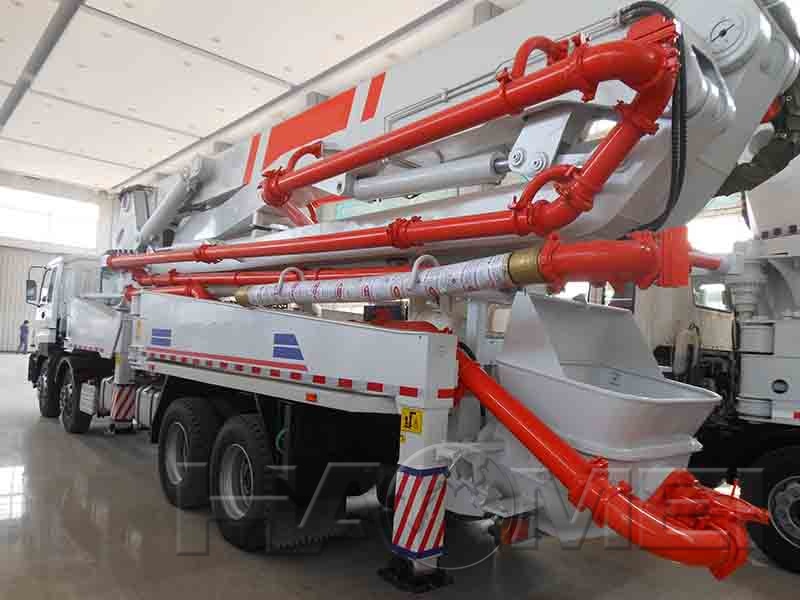
The actual configuration should always be confirmed against the manufacturer's technical data sheet. Boom geometry, pumping output, chassis type, hopper capacity, and pipeline diameter can vary between brands and regional specifications. Evaluating these details before purchase helps ensure the machine matches the concrete mix, site layout, and expected daily output.
Design Details That Support Efficient Placement
The main structure combines a truck chassis, hydraulic pumping unit, multi-section placing boom, turntable, outriggers, pipeline, hopper, and control system. Each assembly affects stability, reach, operating speed, and maintenance requirements.
A typical 38-meter-class machine uses a multi-section boom with folding joints that allow the operator to unfold the boom above obstacles and place concrete in confined areas. The boom's articulated design is especially useful on projects where ready-mix trucks cannot approach every pour location. Smooth proportional control supports accurate end-hose movement, which can help reduce overpouring and manual repositioning.
The turntable connects the boom assembly to the chassis and transfers working loads during slewing. A robust slewing bearing, properly lubricated mounting points, and accurate sensor feedback are essential for stable operation. Outriggers distribute machine loads to the ground and must be deployed on firm, level support. Operators should use suitable outrigger pads where soil bearing capacity is uncertain.
The pumping system normally includes hydraulic cylinders, material cylinders, S-valve or rock valve components, wear plates, cutting rings, agitators, and a hopper screen. During pumping, the system alternates between material cylinders to create continuous concrete flow. The hopper agitator prevents segregation and assists concrete entry into the pumping cylinders.
For projects needing other boom sizes, comparing a Boom Pump range can help match reach and maneuverability to the available working area.
| Component | Important Design Feature | Operational Benefit |
|---|---|---|
| Placing boom | Multi-section articulated structure | Reaches elevated and obstructed pour zones |
| Outriggers | Wide support footprint with hydraulic deployment | Improves stability during pumping |
| Pumping unit | Hydraulic material cylinders and valve system | Delivers continuous concrete flow |
| Hopper and agitator | Screen and mixing blades | Helps prevent large aggregate and segregation issues |
| Remote control | Proportional boom and pump controls | Allows precise placement from the work area |
Material Advantages and Jobsite Value
High-strength structural steel is commonly used for boom sections, turntable supports, and outriggers because these parts experience repeated dynamic loads. Properly engineered steel sections provide a favorable balance between strength, fatigue resistance, and machine weight. A lighter but adequately reinforced boom can improve handling response while reducing unnecessary chassis loading.
Wear-resistant materials are important in the concrete path. The delivery pipeline, elbows, S-valve components, wear plate, cutting ring, and material cylinders are exposed to abrasive aggregate and cement slurry. Hardened wear components can extend replacement intervals when the equipment is operated with suitable concrete mixes and cleaned correctly after each shift.
Hydraulic hoses, seals, and fittings should be selected for the system pressure and environmental conditions. Quality seals help reduce the risk of hydraulic leakage, while protected hose routing lowers the chance of external damage from site debris or accidental contact. Electrical connectors and sensors also need reliable sealing because concrete pumping equipment often works in dusty, wet, and vibrating environments.
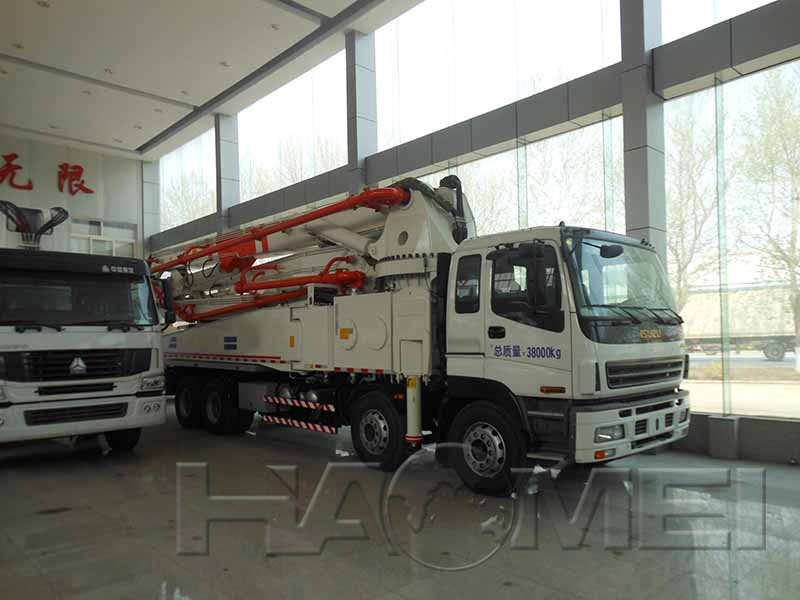
Using this equipment can bring several direct jobsite advantages. The placing boom covers a broad area from one setup position, reducing the need for temporary pipelines and manual wheelbarrow movement. Remote operation keeps the operator close to the pour, improving communication with finishing crews. Controlled delivery can support more even placement in slabs, walls, columns, and foundations.
A 38-meter unit is often suitable where a smaller machine lacks reach but a larger machine creates transport, setup, or access challenges. However, reach alone should not determine selection. Consider the required vertical height, horizontal distance, boom unfolding space, truck approach route, available outrigger area, concrete mix design, and planned production rate.
Common Problems and Practical Corrective Actions
Concrete blockages are among the most common pumping issues. They may result from poor concrete workability, oversized aggregate, inconsistent grading, insufficient lubrication at startup, damaged pipeline sections, or long interruptions during the pour. Before pumping, verify that the mix complies with the pump manufacturer's limits for aggregate size, slump or flow, and cementitious content. Prime the pipeline according to approved operating procedures, and do not restart blindly after a suspected blockage.
| Symptom | Likely Cause | Recommended Action |
|---|---|---|
| Slow or unstable concrete output | Low hopper level, air ingress, worn pumping parts, unsuitable mix | Maintain material level, inspect seals, check wear parts, confirm mix consistency |
| Pipeline blockage | Segregated concrete, poor priming, damaged pipe, extended stoppage | Stop pumping safely, relieve pressure, locate blockage, inspect pipeline before restart |
| Boom movement is jerky | Low hydraulic oil, contaminated oil, valve issue, sensor fault | Check oil level and condition, inspect filters, have hydraulic controls tested |
| Hydraulic oil overheating | Restricted cooling, high system load, low oil level | Clean cooler, inspect fan operation, verify oil level and hydraulic settings |
| Excessive boom vibration | Improper setup, worn pins, loose fasteners, unstable ground | Stop operation, check outriggers and pads, inspect boom joints and fasteners |
Daily inspection should include hydraulic oil level, engine fluids, pipeline clamps, boom pins, safety devices, outrigger condition, hopper screen, and remote-control function. After pumping, clean the hopper, valve area, delivery line, and end hose thoroughly. Hardened residual concrete can damage components and create unsafe pressure conditions during the next operation.
Wear parts should be replaced based on inspection results rather than appearance alone. Measure wear where the manufacturer specifies limits, particularly on the wear plate, cutting ring, S-valve, delivery pipes, elbows, and piston cups. Keeping critical service items available reduces downtime; a planned inventory of Concrete Pum Truck Parts in Stock can support faster routine repairs.
Only trained personnel should operate, clean, maintain, or troubleshoot the machine. Before opening pipeline clamps, removing components, or working near the hopper and valve system, stop the pump, isolate energy sources, and confirm that all residual pressure has been safely released. These procedures protect personnel and help preserve the long-term performance of the equipment.
Original source: https://www.concrete-pump-cn.com/a/38m-pump-truck.html
Tags: 38m Pump Truck, Concrete Boom Pump,
Previous: Truck Mounted Concrete Pump for Sale
Next: Truck Mounted Concrete Pump