

 feedom@haomei-machinery.com
Concrete Pump Truck Cost
Posted On: 23/06/2026 | Posted by: Haomei Concrete Pumps
For construction companies comparing equipment options, concrete pump truck cost is not only the purchase price on a quotation. It is also the value created by reach, pumping stability, fuel use, service access, safety systems, and long-term wear resistance. A well-designed pump truck can reduce labor demand, shorten pour time, and keep concrete quality more consistent from the mixer to the placing point.
A modern truck-mounted concrete pump combines a commercial chassis, hydraulic pumping system, multi-section boom, electrical control system, outriggers, hopper, wear parts, and delivery pipeline. Each part affects cost, but each part also affects output. Understanding these details helps procurement teams compare equipment in a practical way instead of looking only at the first price.
What Shapes the Purchase Price?
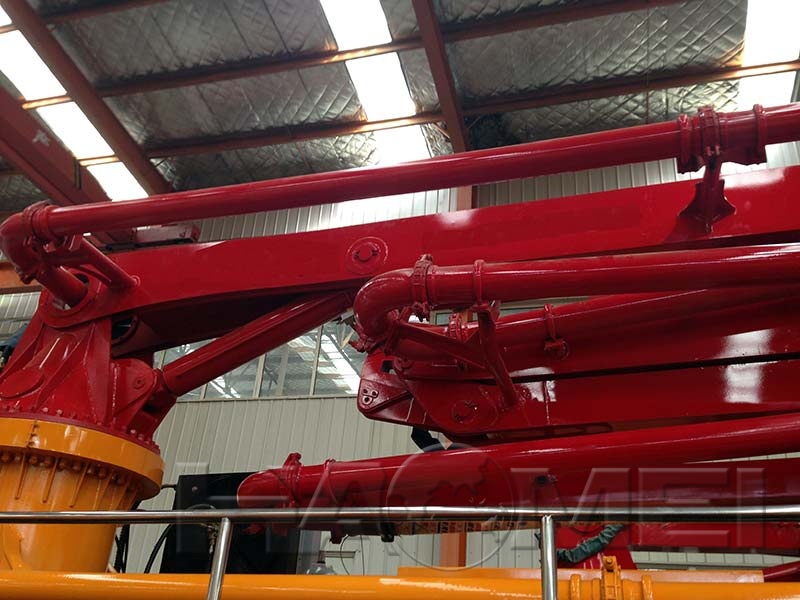
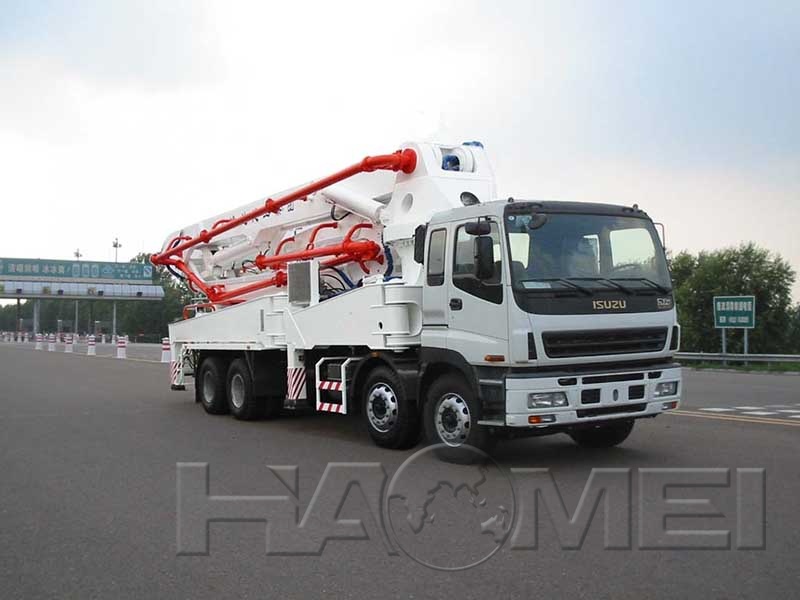
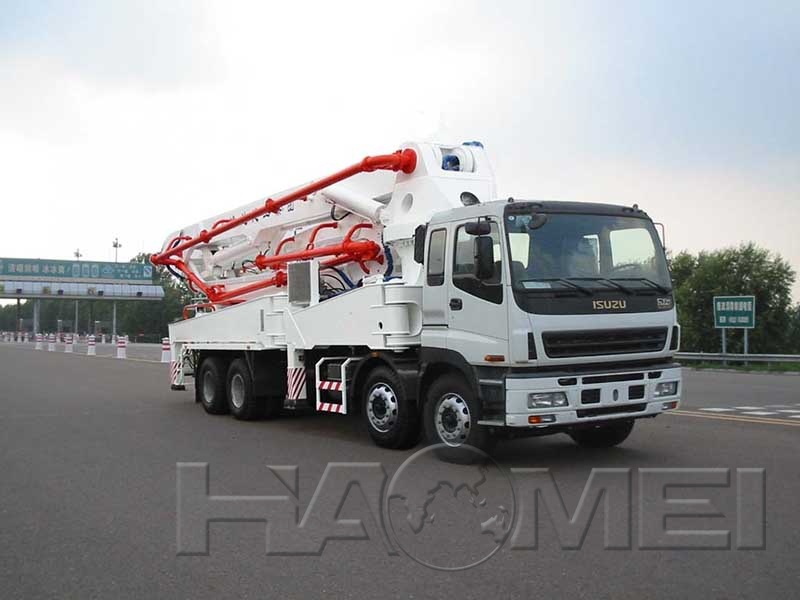
Boom length is one of the most visible cost factors. A compact 30 m to 37 m unit is easier to maneuver in urban work, while a 42 m to 52 m machine can cover larger slabs, bridge work, and mid-rise projects with fewer pipeline changes. Long-boom models require stronger steel structures, larger hydraulic cylinders, advanced stability control, and a chassis with suitable axle load capacity.
Pump capacity also matters. Higher theoretical output requires larger delivery cylinders, stronger main oil pumps, efficient cooling, and a durable valve system. For dense concrete, long horizontal delivery, or high-rise pumping, torque reserve and hydraulic efficiency become especially important.
| Cost factor | What it affects | Why it matters on site |
|---|---|---|
| Boom length | Reach, working radius, truck size | Reduces repositioning and manual pipe handling |
| Chassis brand and emission standard | Road performance, compliance, service network | Supports legal operation and easier maintenance |
| Pumping system capacity | Output, pressure, concrete adaptability | Helps handle different mix designs and placement distances |
| Hydraulic and electrical components | Control accuracy, energy use, diagnostics | Improves smooth operation and fault detection |
| Wear-resistant parts | Service life of hopper, valve, pipes | Lowers downtime from frequent replacement |
For contractors who need a balanced reach for commercial buildings and infrastructure, a 42m Concrete Pump Truck can be a practical choice because it offers strong site coverage without the larger footprint of extra-long boom models. For projects that require longer vertical or horizontal reach, a dedicated Boom Pump lineup allows comparison across multiple boom lengths and output levels.
Design and Material Choices That Protect Value
The boom is the most recognizable structure on the machine, and its design has a direct influence on both price and safety. Advanced booms often use computer-aided structural analysis to reduce unnecessary weight while maintaining strength in high-stress areas. This matters because every kilogram saved in the boom can improve stability, reduce chassis load, or allow a longer reach within transport limits.
High-strength structural steel is commonly selected for boom arms because it offers a favorable strength-to-weight ratio. Critical welds should be produced under controlled procedures, followed by inspection methods such as visual inspection, ultrasonic testing, or magnetic particle testing according to manufacturer quality plans and applicable standards. These checks help detect weld defects before the machine enters service.
The hopper, S-valve, spectacle plate, cutting ring, and delivery cylinders face constant abrasion from sand, aggregate, cement paste, and pressure pulses. Quality equipment uses wear-resistant alloy materials, hard-facing processes, or replaceable liners in these areas. While these parts add cost, they help control lifecycle expense because replacement intervals can be longer under proper operation.
The hydraulic system is another area where material and component selection matters. Premium seals, well-matched pumps, proportional valves, and efficient oil cooling can reduce pressure loss and heat buildup. Lower oil temperature protects seals and hoses, while stable pressure improves pumping smoothness.
| Component | Preferred design feature | Benefit |
|---|---|---|
| Boom structure | High-strength steel and optimized section shape | Strong reach with controlled machine weight |
| Outriggers | Wide support span and interlock logic | Better stability during pumping |
| S-valve system | Wear-resistant surface and tight sealing | Smooth switching and reduced leakage |
| Delivery pipeline | Hardened inner wall or twin-wall pipe | Longer service life under abrasive concrete |
| Control system | Remote control, diagnostics, safety alerts | Easier operation and faster fault location |
Smart control is now a major product advantage. Radio remote control lets the operator stand near the pour point and adjust boom movement and pumping speed with better visibility. Boom damping technology reduces end-hose shake, which helps improve placement accuracy. Some machines also offer automatic lubrication, data display, fault codes, and emergency stop circuits. These systems do not remove the need for trained operators, but they make daily work safer and more efficient.
Operating Benefits and Practical Troubleshooting
A concrete pump truck improves jobsite productivity by delivering concrete directly to the placement area. Compared with crane bucket placement or long manual wheelbarrow routes, pumping is faster, steadier, and less labor intensive. It is especially valuable when access is limited, when the pour point is above ground level, or when concrete must be placed continuously to avoid cold joints.
The economic value of the machine comes from several sources: reduced labor, shorter pour windows, less site congestion, and better schedule control. On large pours, continuous pumping can also help maintain concrete workability because the mix spends less time waiting between unloading and placement.
Good operation has a strong effect on ownership expense. The operator should confirm outrigger ground support, boom unfolding clearance, hopper grille condition, hydraulic oil level, lubrication points, pipeline connection safety, and emergency stop function before pumping. Concrete mix design should also suit pumping. According to standard concrete technology practice, pumpability is influenced by aggregate grading, cementitious content, water-reducing admixture performance, slump or flow, and segregation resistance. When in doubt, the concrete supplier and site engineer should verify the mix before a major pour.
Common problems are usually connected to mix quality, wear parts, hydraulic pressure, sensor signals, or cleaning routines. The following table gives practical responses used by service teams.
| Symptom | Likely cause | Practical action |
|---|---|---|
| Low pumping output | Worn cutting ring, leaking delivery cylinder, low hydraulic efficiency | Inspect wear gap, check seals, measure system pressure |
| Pipe blockage | Poor mix pumpability, delayed pumping, insufficient priming | Stop pumping, release pressure safely, locate blockage, clean pipe, review mix |
| Boom movement is slow | Low hydraulic oil, clogged filter, oil temperature too high | Check oil level, replace filter if needed, inspect cooler and fan |
| Excessive boom vibration | Unstable pumping speed, air in concrete line, worn boom pin or bushing | Adjust speed, ensure continuous feed, inspect boom joints |
| Remote control failure | Low battery, signal interference, receiver fault | Replace battery, switch to backup control, inspect receiver wiring |
| Hopper splashing or backflow | S-valve sealing wear, wrong pumping rhythm, concrete segregation | Check spectacle plate and cutting ring, adjust settings, improve concrete consistency |
Safe troubleshooting starts with depressurizing the system before opening any pipe or hopper area. Never stand in front of a pressurized delivery line. Lockout procedures, protective equipment, and manufacturer service instructions should be followed during repair. Keeping genuine wear parts in stock, recording operating hours, and replacing filters and lubrication grease on schedule can prevent many expensive shutdowns.
When comparing machines, evaluate reach, output, chassis support, material quality, service access, spare part supply, warranty terms, and operator training together. A lower initial price may be attractive, but a truck with stronger structural design, reliable hydraulics, and wear-resistant components often delivers better value through higher uptime and fewer interruptions.
Original source: https://www.concrete-pump-cn.com/a/concrete-pump-truck-cost.html
Tags: concrete pump truck cost, concrete boom pump, pump truck materials, concrete pumping equipment,
Previous: Towable Concrete Pump
Next: Concrete Pump Long Boom