

 feedom@haomei-machinery.com
Concrete Mixer With Pump For Sale
Posted On: 29/09/2026 | Posted by: Haomei Concrete Pumps
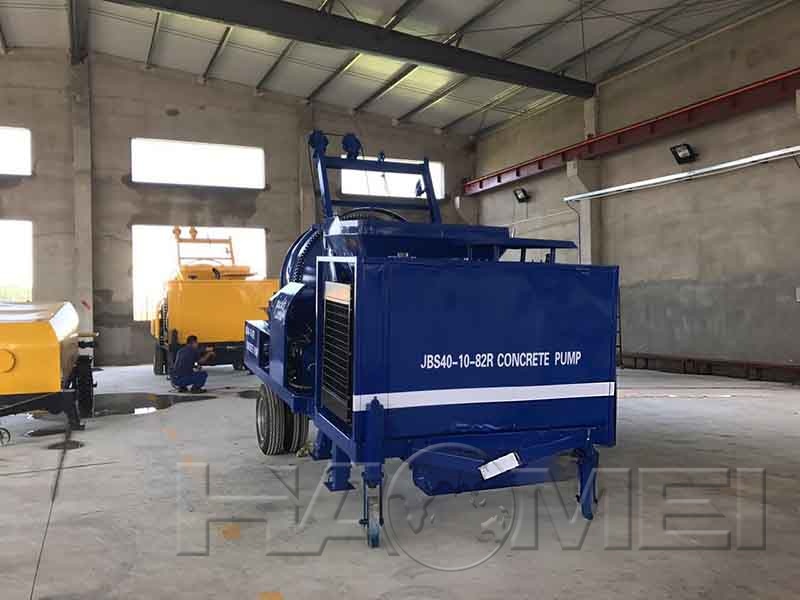
A concrete mixer with pump for sale combines batching, mixing, and concrete delivery in one mobile unit. It is designed for projects where ready-mix concrete trucks cannot easily reach the pour location, including rural housing, foundations, road repairs, slope protection, and small commercial structures. By mixing material on site and pumping it directly to the working area, contractors can reduce handling steps, improve concrete freshness, and work efficiently in limited spaces.
Design Details and Material Advantages
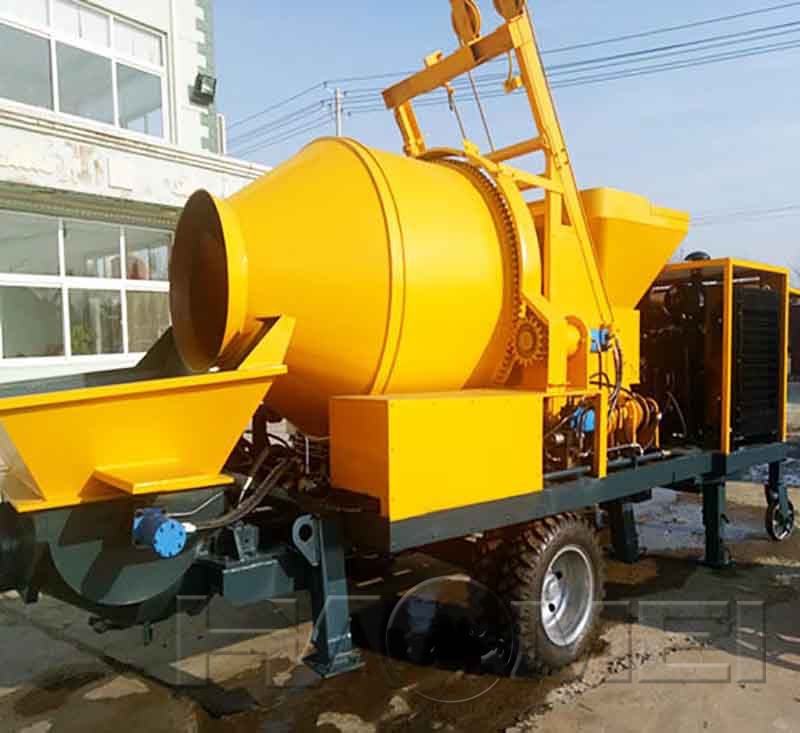
The equipment typically includes a loading hopper, mixing drum or twin-shaft mixing system, hydraulic pumping unit, distribution valve, concrete cylinders, boom or delivery pipelines, diesel engine or electric motor, and control system. These components are mounted on a robust trailer chassis or truck frame for reliable movement between projects.
A well-designed mixing system uses wear-resistant alloy steel for the mixing blades, liner plates, and drum surfaces. These high-wear areas are exposed to aggregate friction during every batch. Replaceable liners and blades help extend service life while allowing maintenance teams to renew individual wear parts instead of replacing the entire mixing chamber.
The pumping section normally uses high-strength steel delivery cylinders with chrome-plated surfaces. Chrome plating improves corrosion resistance and reduces friction between the cylinder wall and piston. Quality rubber pistons and sealing rings are equally important because they maintain pumping pressure and prevent concrete slurry from leaking into the hydraulic side.
The hopper grille should be strong enough to stop oversized stones, bags, or debris from entering the mixing chamber. A vibration motor or hopper agitator can support continuous feeding when low-slump concrete is used. Hydraulic oil pipes should be routed neatly, protected from abrasion, and fitted with reliable connectors to reduce the risk of leakage during demanding work cycles.
| Main Component | Preferred Material or Feature | Practical Benefit |
|---|---|---|
| Mixing blades and liners | Wear-resistant alloy steel | Resists abrasion from sand and aggregate |
| Pumping cylinders | Chrome-plated high-strength steel | Improves service life and pumping stability |
| Hydraulic pipes | High-pressure hose with protective routing | Reduces leakage and hose damage |
| Hopper grille | Heavy-duty steel screen | Prevents oversized material from blocking the system |
| Trailer chassis | Reinforced structural steel | Supports safe transport and equipment stability |
For projects needing a compact integrated configuration, a Concrete Mixing Pump can provide a practical balance between output capacity, maneuverability, and on-site concrete control.
Operating Advantages for Construction Work
The primary advantage is that mixing and pumping occur in the same machine. Sand, cement, water, and aggregate can be loaded into the hopper, mixed to the required consistency, and transported through pipelines to the pouring point. This reduces dependence on wheelbarrows, cranes, and separate mixer and pump equipment.
On-site mixing also helps crews adjust the concrete mix according to weather, aggregate moisture, and placing requirements. However, mix changes should follow the approved project design. Excess water may improve flow temporarily but can reduce concrete strength and increase segregation risk. Operators should measure water carefully and maintain a workable, pumpable mix with correctly graded aggregate.
A mixer pump can be particularly useful when the placement distance includes narrow access roads, uneven ground, elevated floors, or confined work zones. Trailer-mounted versions can be positioned near the aggregate stockpile, while delivery pipelines carry concrete around obstacles. A Concrete Mixer Pump Trailer is often suitable where frequent relocation and flexible site positioning are required.
Before selecting capacity, compare the required hourly concrete volume with the real conditions on site. Pump output is affected by concrete quality, pipe diameter, vertical lifting height, pipeline length, number of bends, and the efficiency of material loading. Selecting a machine only by its maximum theoretical output can lead to an unsuitable configuration. A realistic capacity calculation should include loading time, mixing cycle time, waiting time, and cleaning time.
| Site Condition | Recommended Selection Consideration |
|---|---|
| Remote project with limited electrical supply | Diesel-powered unit with dependable fuel system |
| Urban site with power access and noise restrictions | Electric model where voltage and cable capacity are confirmed |
| Narrow access or small pour volume | Compact trailer unit with manageable pipeline layout |
| Long-distance or elevated delivery | Higher pumping pressure and correctly sized delivery pipe |
| Abrasive aggregate or frequent operation | Enhanced wear parts and a planned spare-parts inventory |
Common Problems and Practical Troubleshooting
Concrete blockage is one of the most common operating problems. It may be caused by dry or poorly graded concrete, oversized aggregate, long pauses during pumping, excessive pipeline bends, or inadequate lubrication before pumping. Stop the machine immediately if pressure rises abnormally. Do not continue forcing the pump, because excessive pressure can damage pipes, clamps, seals, or hydraulic components. Release pressure according to the equipment manual, inspect the blocked section, and clean the line safely.
If the pump delivers weakly or the output becomes uneven, first check the hopper level and concrete consistency. Then inspect the agitator, suction area, S-valve or distribution valve, piston seals, and hydraulic oil level. Air entering the suction side can also cause irregular pumping. Ensure all suction connections are tight and that the hopper contains sufficient concrete to cover the intake area.
Hydraulic overheating often indicates low oil level, contaminated oil, a blocked cooler, incorrect oil grade, or extended operation beyond the machine's duty conditions. Clean the oil cooler regularly, inspect the fan operation, and replace hydraulic oil and filters according to the manufacturer's maintenance schedule. Never open hydraulic fittings while the system is pressurized.

Daily cleaning is essential. After each shift, wash the hopper, mixing chamber, discharge area, and delivery pipeline before concrete begins to harden. Check blade wear, grease lubrication points, tire condition, pipe clamps, electrical connections, and emergency stop controls. Keeping accurate records of oil changes, piston replacement, liner wear, and blockage events helps maintenance personnel identify recurring issues before they cause costly downtime.
Original source: https://www.concrete-pump-cn.com/a/concrete-mixer-with-pump-for-sale.html
Tags: Concrete Mixer With Pump For Sale, Concrete Mixing Pump,
Previous: Concrete Mixer Truck With Pump
Next: